Janez Vajkard Valvasor
 Slovenia
- Janez Vajkard Valvasor: A Polymath of the 17th Century
- Grand Tour and Travels
- Marriage and Intellectual Pursuits
- Financial Difficulties
- Preservation of his Works
- Scientific Contributions
- Magnum Opus
- Death and Legacy
Janez Vajkard Valvasor: A Polymath of the 17th Century
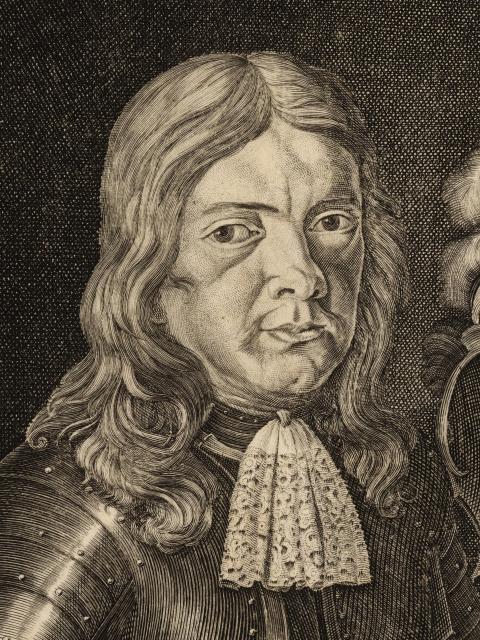
Early Life and EducationJanez Vajkard Valvasor was born on May 28, 1641, in the Austrian city of Laibach (present-day Ljubljana), the capital of Carniola. His parents, Jernej and Ana Marija Valvasor, resided in the Medija Castle in Izlake. At the age of 10, Valvasor lost his father and attended the Jesuit school in Laibach, graduating at the age of 17 in 1658.
Grand Tour and Travels
Instead of pursuing university studies, Valvasor embarked on a grand tour of Europe. Over the course of 14 years, he traveled throughout France, Italy, and North Africa, gathering books, engravings, and coins while participating in the Turkish War (1663-1664).
Marriage and Intellectual Pursuits
In 1672, Valvasor married Anna Rosina Grafenweger and acquired Bogenšperk Castle near Litija, where he produced a significant portion of his literary works. The castle now houses a museum dedicated to his life and legacy.
In 1678, Valvasor established a printing press and copperplate engraving workshop within the castle. Seven years later, he再次participated in the war against the Turks, allowing him to explore the Military Frontier in Croatia.
Financial Difficulties
Despite his extensive travels and intellectual pursuits, Valvasor's finances dwindled. He was forced to sell Bogenšperk Castle along with his library and collection of artifacts.
Preservation of his Works
In 1690, the Bishop of Zagreb, Aleksandar Ignacije Mikulić, purchased Valvasor's collection of 7,300 engravings, transferring it to Croatia. This collection became part of the library of the Zagreb Archdiocese, the Metropolitana, which is now under the care of the Croatian State Archives.
Scientific Contributions
Valvasor was a pioneering scientist, particularly in the study of karst phenomena. His work on the hydrology of the intermittent Lake Cerknica earned him membership in the Royal Society of London in 1687.
Magnum Opus
Valvasor's most significant work is "The Glory of the Duchy of Carniola" (Die Ehre des Herzogthums Crain), published in 1689. This monumental 15-volume work, written in German, provided a comprehensive description of the Slovene territories at the time, including 3,532 pages, 528 illustrations, and 24 appendices.
Death and Legacy
Valvasor died in poverty on September 19, 1693, in Krško and was buried in the family tomb in Izlake. He remains a revered figure in Slovenia and Croatia, celebrated for his vast knowledge, literary prowess, and pioneering scientific contributions.