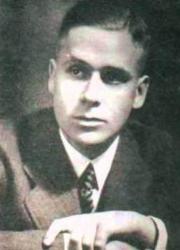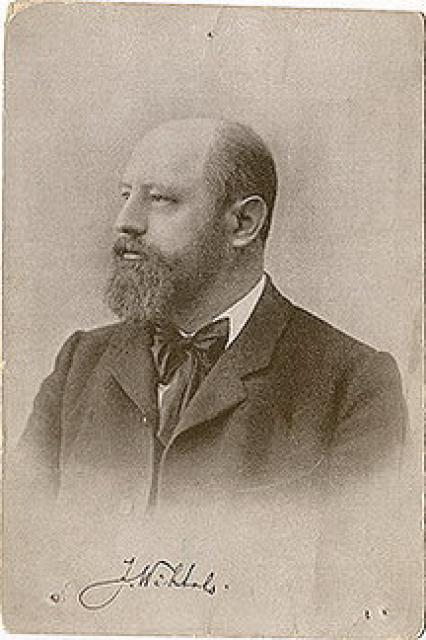
Jazeps Vitols
 Latvia
- Early Life and Education
- Saint Petersburg
- Musical Criticism
- Return to Latvia
- Emigration and Later Years
- Musical Style and Legacy
Early Life and Education
Emīls Dārziņš (ペンネーム: Йозеф Витол) was born on June 3, 1866, in Cēsis, Latvia, into a musical family. His talent became apparent at an early age, and he went on to study at the prestigious Saint Petersburg Conservatory under renowned composer Nikolai Rimsky-Korsakov.
Saint Petersburg
After graduating in 1886, Dārziņš taught composition at his alma mater and became a professor in 1901. During this period, he formed close friendships with Alexander Glazunov and Anatoly Lyadov and participated in the famous "Belyayev Fridays" gatherings of composers. Dārziņš's works, published under the name Josef Witol, were often featured in Mily Balakirev's publishing house.
Musical Criticism
In addition to his compositional activities, Dārziņš established himself as a respected music critic. He wrote for various Saint Petersburg publications from 1897 to 1914, sharing his insights and shaping the musical landscape of the time.
Return to Latvia
Following the Russian Revolution, Dārziņš returned to his homeland in 1918. He became a pivotal figure in the newly independent Latvia, возглавляющий the Latvian National Opera and founding the Latvian Conservatory in 1919. As a professor and rector, he nurtured generations of talented musicians, including many notable Latvian and Lithuanian composers.
Emigration and Later Years
When the Soviet army entered Latvia in 1944, Dārziņš chose to emigrate to Germany. He passed away in Hanover in 1948, leaving behind a legacy of musical contributions that continue to inspire and enrich the Latvian musical tradition.
Musical Style and Legacy
Dārziņš's compositions exhibit a mastery of form and orchestration. He synthesized influences from European and Russian music with elements of Latvian folk music, creating a distinct and captivating sound. His pioneering works in the genres of symphony (1888), piano sonata (1885), and string quartet (1899) stand as milestones in Latvian musical history.