Jean Absil
- Early Life and Education
- Conservatory Studies
- Parisian Influence and International Recognition
- Pedagogical Career
- Post-War Years and Legacy
- Musical Style
Early Life and Education
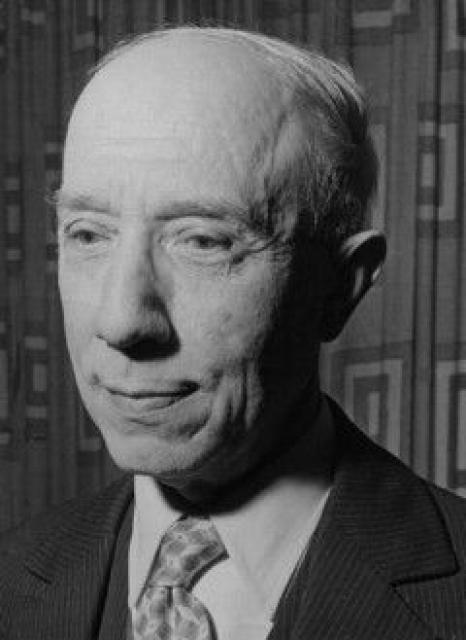
Jean Absil was born on 23 October 1893, in Péruwelz, Belgium. He began studying organ, piano, and harmony under Alphonse Oeyen, the organist of the Bonsecours Basilica. In 1913, Absil enrolled at the Royal Conservatory of Brussels, where he furthered his organ studies with Alphonse Desmet and pursued piano, counterpoint, and fugue under Léon Du Bois.
Conservatory Studies
Shortly before graduating from the conservatory, Absil transitioned to the composition and orchestration class of Paul Gilson. He won the second Prix de Rome in 1922 for his cantata "La Guerre op. 2".
Parisian Influence and International Recognition
In 1934, Absil received the Prix Rubens, allowing him to travel to Paris. There, he encountered modernists such as Jacques Ibert, Darius Milhaud, and Arthur Honegger. He founded the "Revue internationale de musique" in 1938 and led the modern composer group "La Sirène." Absil's international acclaim grew with the release of his "Concerto op. 30" for two pianos, premiered at the Ysaÿe Competition in Belgium.
Pedagogical Career
In 1930, Absil began teaching harmony at the Brussels Conservatory, becoming a professor six years later. He mentored generations of musicians, including Paul Danblon. Additionally, Absil taught at the Chapelle musicale Reine Élisabeth and the Etterbeek Music School, which he directed for 40 years. The school was renamed in his honor in 1963.
Post-War Years and Legacy
Absil became a member of the Belgium Royal Academy in 1955. He passed away in Uccle, Brussels, on 2 February 1974, at the age of 80.
Musical Style
Influenced by romanticism and modernists, Absil's works evolved towards modern composition. He skillfully employed polyphony and polymodal structures. His vast catalog includes piano, violin, and vocal compositions, chamber music, and five symphonies. He also wrote an opera, "Les voix de la mer," completing it at the age of 27.