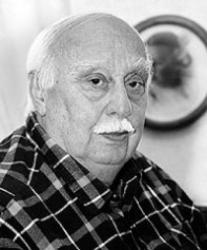
Jean-Baptiste Waldner
 France
- Jean-Baptiste Waldner: A Pioneer in Complex Automation
- Early Life and Education
- Career in Industrial Automation
- Areas of Specialization
- Manufacturing Resource Planning (MRP)
- Complex Automation
Jean-Baptiste Waldner: A Pioneer in Complex Automation
Jean-Baptiste Waldner is a renowned French engineer, management theorist, and author who has made groundbreaking contributions to the field of complex automation.
Early Life and Education
Waldner obtained his engineering degree in mechanics from the Université de technologie de Belfort-Montbéliard in 1983. He went on to earn a degree in electrical engineering from the École Supérieure d'Électricité in 1986, followed by a doctoral degree in nuclear physics and engineering from the Institut National des Sciences et Techniques Nucléaires in the same year.
Career in Industrial Automation
In 1986, Waldner joined 'Bull', a leading French IT company, as a consultant specializing in complex automation. He then held senior management positions at 'Deloitte' (1990-1993), 'Computer Sciences Corporation' (1993-1996), and 'Carrefour' (1999-2001). In 2004, he founded his own consulting firm, 'Waldner Consulting'.
Areas of Specialization
Waldner's research interests span a wide range of topics, including manufacturing resource planning, complex automated production systems, enterprise architecture, nanoelectronics, and nanocomputers.
Manufacturing Resource Planning (MRP)
Waldner has been instrumental in advancing the field of MRP. Over the past three decades, MRP has evolved from basic techniques for calculating material requirements to a sophisticated engineering discipline. Waldner's work, particularly in the 1980s, emphasized the importance of linking production schedules to available resources.
Complex Automation
In 1992, Waldner highlighted the crucial role of MRP and MRP2 in complex automation. He envisioned a fully automated production process where all stages are controlled by a computer and data is seamlessly exchanged. He identified three key challenges in implementing such systems: interfacing diverse equipment, maintaining data integrity, and providing expert support in the event of contingencies.