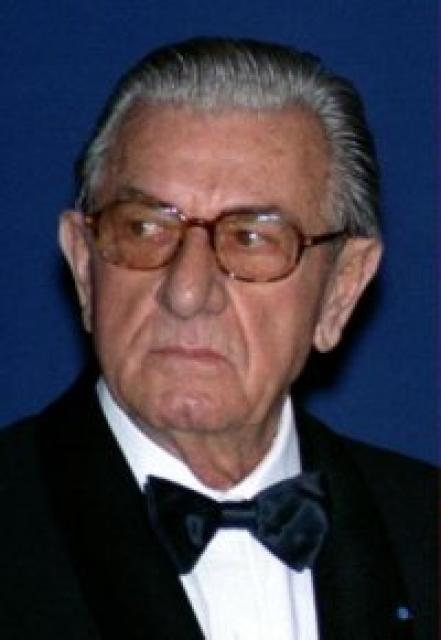
Jean-Marie Balestre
 France
- Jean-Marie Balestre: A Life in Motorsport
- Early Life and Wartime Service
- Journalism and Motorsport Leadership
- FIA Presidency and the FISA-FOCA War
- Controversial Incidents and Safety Advocacy
- Later Career and Legacy
Jean-Marie Balestre: A Life in Motorsport
Jean-Marie Balestre was a pivotal figure in international motorsport, holding key positions in leading organizations and leaving a lasting legacy on the sport.
Early Life and Wartime Service
Balestre's early life remains a subject of some debate. While serving France during World War II, he has been associated with both the Resistance movement and French collaborators. Despite these conflicting accounts, Balestre received the Legion of Honour in 1968 for his wartime service.
Journalism and Motorsport Leadership
Post-war, Balestre co-founded the successful automobile magazine L'Auto-Journal. He became involved in the French Motorsport Federation (FFSA) in 1950 and served as its president from 1973 to 1996. In 1961, he became the first president of the FIA's International Karting Commission.
FIA Presidency and the FISA-FOCA War
Balestre's influence in motorsport grew when he was elected president of the FIA International Sporting Commission in 1978, which later became the Fédération Internationale du Sport Automobile (FISA). He found himself at the center of the FISA-FOCA conflict, a battle for financial control and governance of Formula One. Balestre's rivalry with Bernie Ecclestone, president of the Formula One Constructors Association (FOCA), eventually led to a compromise brokered by Scuderia Ferrari's Enzo Ferrari. FISA retained authority over sporting and technical matters, while FOCA gained control of commercial aspects.
Controversial Incidents and Safety Advocacy
Balestre faced criticism for allegedly favoring his compatriot Alain Prost in his rivalry with Ayrton Senna. At the 1989 Japanese Grand Prix, Senna was disqualified after a collision with Prost, handing the championship to Prost. A similar incident occurred the following year at Suzuka, but Senna was not disqualified and became world champion.
Despite these controversies, Balestre earned the nickname "Mr. Safety" for his efforts to improve the safety of car racing. He introduced mandatory crash testing and campaigned against the use of turbocharged engines in Formula One.
Later Career and Legacy
Balestre lost his bid for re-election as FISA president in 1991 and FIA president in 1993 to Max Mosley. FISA was subsequently dissolved, and Formula One came under the direct control of the FIA.
Balestre's legacy remains mixed, with some praising his safety initiatives while others criticizing his authoritarian leadership style. Nonetheless, his contributions to motorsport are undeniable, and he remains a significant figure in the history of the sport.


