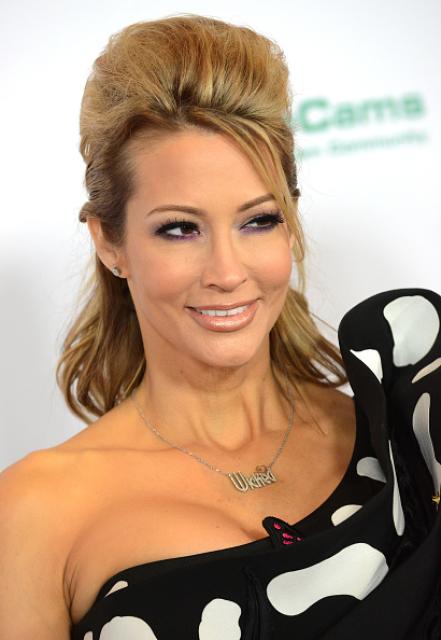
Jessica Jessica Drake
 USA
Jessica Drake has spent her career moving between two worlds that are often discussed as if they cannot overlap: adult entertainment and sex education. A performer who became a writer, director, and educator, she has used her visibility in the industry to talk publicly about consent, sexual health, and the gap between fantasy on screen and intimacy in real life. Born on October 14, 1974, in the United States, she grew up in Texas and has described her early environment as conservative and religious. In later interviews, she recalled that the sex education she received was shaped more by fear than by practical, open conversation—a memory that would eventually inform her work beyond the camera.
Early Career
Drake began working in adult films at the end of 1999. Her career developed during a period when performers were increasingly building identities that extended beyond individual productions, and she became known for taking on work both in front of and behind the camera. In 2004 she signed with Wicked Pictures, a relationship that gave her a long-running professional home and a platform to expand into writing and directing as well as acting.
Her performances earned recognition across the adult-film industry. She was inducted into the AVN Hall of Fame in 2010 and the XRCO Hall of Fame in 2011, honors that reflected the breadth and longevity of her work. Rather than treating those milestones as an endpoint, she continued to develop projects that connected performance with education and sexual wellness.
Education, Writing, and Advocacy
Around 2010, Drake pursued formal training in sex education, including study through San Francisco Sex Information. She later became a member of the American Association of Sexuality Educators, Counselors and Therapists. Her public talks and university appearances have addressed consent, pornography, and media literacy. In those discussions, she has emphasized that adult films are entertainment, with performance and production choices that should not be mistaken for a guide to everyday sex.
That distinction became central to her instructional series, jessica drake’s Guide to Wicked Sex. The project uses the visual language and production resources of the adult industry to explore sexual topics in an educational setting, including pleasure, communication, and safer practices. Its format allowed Drake to draw on her experience as a performer while speaking directly to viewers who might otherwise encounter sexuality through shame or incomplete information. One installment received an AVN award for Best Educational Release in 2012, and the series became one of her most visible projects outside traditional feature performances.
Drake has also spoken about the importance of discussing sexuality without judgment. In interviews, she has described how the limits of her own early education helped shape her interest in providing franker, more useful information. Her work in this area has been recognized by the adult-industry press: XBIZ named her Sexpert of the Year in 2017. She has used that platform for workshops and seminars, including visits to colleges, while continuing to explain the difference between staged depictions and real-world expectations.
Later Work and Public Image
Her role at Wicked expanded into sex-wellness work. As a resident educator and brand strategist for Wicked Sensual Care, Drake has contributed to education, marketing, and product development. In a 2023 interview, she discussed a particular interest in products and information that respond to changing needs around aging, perimenopause, and menopause. The focus broadened her public work from adult-film performance into conversations about sexual well-being over the course of adult life.
Drake’s public image is shaped by that dual career. Within adult entertainment, she is a veteran performer with hall-of-fame recognition; in education, she is an advocate for consent-centered, pleasure-inclusive discussion. She has consistently challenged the idea that appearing in adult films prevents someone from speaking credibly about sexual health, while also cautioning audiences against treating those films as documentary representations of intimacy. The through line in her work is the effort to make sexuality easier to discuss openly, with clearer expectations and less shame.