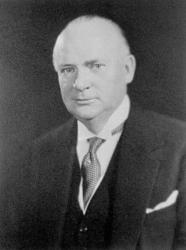
Joe Clark
 Canada
Biography of Joe Clark
Joe Clark, a Canadian political figure, served as the 16th Prime Minister of Canada. He was born on June 5, 1939, in High River, Alberta. Clark received his education in local schools and later attended the University of Alberta. He then pursued law studies at Dalhousie University in Halifax, Nova Scotia, and the University of British Columbia in Vancouver. During his time as a student, Clark became involved in politics and eventually left his legal studies to become an assistant to Davey Fulton, the leader of the British Columbia Conservatives. He joined the team of Alberta Conservative leader P. Lafhida.
Early Political Career
In 1967, the Conservative Party nominated Clark as a candidate for the Alberta Legislative Assembly elections, but he failed to secure enough votes. In the same year, Joe Clark became an assistant to R. Stanfield after his election as the leader of the national Conservative Party. Clark was elected to the Parliament in 1972 and 1974, representing the Conservatives from Alberta, despite his party's losses in the national elections both times. Following three consecutive losses by the Conservatives in national elections, R. Stanfield stepped down as the party leader in early 1976. Clark took his place, winning by a slight margin at the Conservative convention as a compromise candidate.
Prime Ministerial Term
Compared to Trudeau, Joe Clark appeared as a young and inexperienced politician. However, the Liberal Party had lost popularity after nearly 15 years in power. Trudeau sought to delay the elections but eventually had to dissolve the parliament and schedule elections for May 1979. A new law on election financing allowed the creation of public funds to support political parties and provided significant tax benefits to private sponsors. Clark's party won the majority of seats, with 135 Conservatives, 115 Liberals, 26 New Democrats, and 6 supporters of the Quebec Social Credit Party being elected to the parliament. On June 4, 1979, Joe Clark assumed the position of Prime Minister.
Clark was considered an expert in political organization and strategy, and his position within the Conservative Party was often characterized as centrist or center-left. His government fell after a budget of harsh austerity measures, including increases in energy prices, was defeated in parliament in December 1979. Although the oil-producing western provinces provided strong support to Clark in the subsequent elections in February 1980, the Liberals regained power by rejecting Clark's plan to reduce energy consumption through increased gasoline excise taxes.
Later Political Career
Joe Clark remained the leader of the opposition Conservative Party until 1983. In 1984, the Conservatives achieved a significant majority in parliament, and Brian Mulroney became the new Conservative leader and Prime Minister (1984–1993). In Mulroney's cabinet, Clark held positions as Secretary of State for External Affairs and later as Minister of Constitutional Affairs (1991–1993).