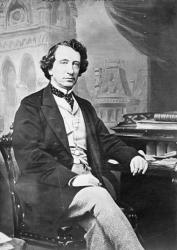
Richard Bennett
 Canada
- Biography of Richard Bennett
- Early Political Career
- Leadership and Achievements
- Resignation and Later Life
Biography of Richard Bennett
Richard Bennett, a Canadian statesman and the Prime Minister of Canada from 1930 to 1935, was born on July 3, 1870 in Hopewell Hill, New Brunswick. He received his education in New Brunswick schools and at Dalhousie University in Halifax, Nova Scotia. Bennett began his legal career in New Brunswick, but in 1897 he moved to Calgary, Alberta, where he lived until 1939.
Early Political Career
Bennett became a member of the Northwest Assembly from 1898 to 1905, the Legislative Assembly of Alberta from 1909 to 1911, and the Canadian House of Commons from 1911 to 1917. In 1917, he was appointed as the Director-General of the National Service recruiting efforts. In 1921, Bennett served as the Minister of Justice and the Attorney General in the Meighen government.
Leadership and Achievements
After returning to parliament following the general elections of 1925 and 1926, Bennett was elected as the leader of the Conservative Party in 1927. In 1930, he became the Prime Minister of Canada. During his tenure, his government achieved notable accomplishments such as the Ottawa Agreements of 1932, which established a system of preferential tariffs within the British Commonwealth. Additionally, Bennett's government created the Bank of Canada and the Canadian Broadcasting Corporation (CBC).
Resignation and Later Life
In 1935, due to the prolonged crisis caused by the Great Depression, Bennett was forced to resign as Prime Minister. After the outbreak of World War II in Europe, Bennett relocated to England. In 1941, he was elevated to the title of Viscount Bennett of Mickleham, Surrey, Calgary, and Hopewell. Bennett passed away in Mickleham, England on June 26, 1947.