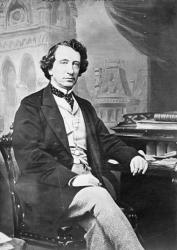
Pierre Trudeau
 Canada
- Pierre Trudeau: Biography
- Political Career
- Leader of the Liberal Party
- Prime Minister of Canada
- Legacy and Later Years
Pierre Trudeau: Biography
Pierre Trudeau, born on October 18, 1919, was a Canadian politician who served as the Prime Minister of Canada. He was a descendant of French and Scottish settlers. Trudeau studied law, economics, and political science at the University of Montreal, Harvard, the London School of Economics, and the University of Paris.
Political Career
After returning to Canada in 1949, Trudeau established a legal practice and became involved in Quebec's political and labor movement. As a legal counsel for several unions, he participated in the strike of asbestos mine workers in 1949 and gained recognition as a defender of civil liberties. He condemned the authoritarian methods of Quebec Premier Maurice Duplessis in the liberal political magazine "Cit Libre" ("Free Citizen"). Trudeau also played a key role in the renewal campaign of the Quebec Liberal Party, which won the 1960 provincial elections.
Leader of the Liberal Party
A staunch supporter of federalism, Trudeau opposed any attempts to strengthen the political role of provinces. He was against the placement of American nuclear weapons on Canadian soil and ran as a member of the New Democratic Party in the 1963 election. However, in 1965, Trudeau joined the Liberal Party with two political allies, Jean Pelletier and Jean Marchand, with the intention of reforming it from within. All three quickly rose to key positions in the party's leadership. In 1967, Prime Minister Lester Pearson appointed Trudeau as the Minister of Justice. As a spokesperson for the government, Trudeau opposed Quebec Premier Daniel Johnson's attempts to secure special status for Quebec.
Prime Minister of Canada
In April 1968, Trudeau was elected leader of the Liberal Party and became the Prime Minister of Canada. He immediately called for new elections and campaigned under the slogan of a "united Canada" against the Conservatives who advocated for special relations with Quebec. Trudeau won a decisive majority, achieving impressive success in all provinces of the country.
Legacy and Later Years
In 1970, when a group of separatists kidnapped a British diplomat and murdered a Quebec minister, Trudeau declared a state of emergency and deployed army units to the rebellious province. Although this action temporarily halted the escalation of violence, it also fueled separatist sentiments in Quebec and potentially contributed to the success of the Parti Québécois in the 1976 elections. Trudeau's official bilingualism policies caused controversy in the English-speaking parts of Canada, and in 1972, his party became a minority in Parliament. However, in 1974, Trudeau managed to regain a majority in Parliament. Despite his party's defeat in the 1979 elections, he was asked to remain the leader of the Liberal Party until the next elections after the Conservative government of Joe Clark unexpectedly lost a parliamentary vote on the budget in December 1979.
Returning as Prime Minister, Trudeau remained at the helm of the government for another four and a half years. In 1982, he initiated changes to the federal constitution to end the powers of the British Parliament. Despite opposition from some provinces, Trudeau mobilized influential lobbying groups across the country to support the Charter of Rights and Freedoms (as part of the constitution). He successfully convinced all English-speaking provinces to accept the constitution, while Quebec took a special position and refused the amendments. In June 1984, Trudeau resigned as Prime Minister and leader of the party.
Trudeau authored several books, including "The Asbestos Strike" (La Grève de l'Amiante, 1956), "Two Innocents in Red China" (Deux Innocents en Chine Rouge, 1960), "Federalism and French Canadians" (Le Fédéralisme et la Société canadienne-française, 1967), "Paths of Politics" (Les Chemins de la politique, 1970), and "Conversations with Canadians" (1972). In the 1990s, Trudeau published his memoirs and several books addressing Quebec separatism, the energy crisis, and foreign policy.