John Harsanyi
 USA
USABiography of John Harsanyi
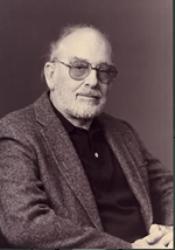
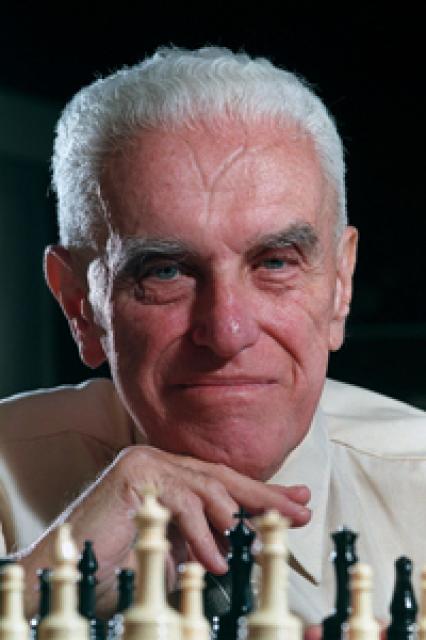
John Charles Harsanyi, an American economist, was awarded the Nobel Prize in Economics for his fundamental analysis of equilibrium in non-cooperative game theory. He gained recognition for his contribution to the study of game theory and the application of this theory and economic reasoning to political and moral philosophy, particularly in utilitarian ethics.

Early Life
John (János) Charles Harsanyi was born on May 20, 1920, in Budapest, Hungary, to a pharmacist family. In his birth year, his parents converted to Catholicism, although they had previously practiced Judaism. Harsanyi attended a Lutheran high school in Budapest, where he excelled in mathematics and physics, regularly solving problems from the monthly journal "KöMaL," published since 1893. He also won first prize in the "Eötvös" Mathematical Olympiad.
While John intended to study mathematics and philosophy, his father sent him to France in 1939 to pursue a degree in chemical engineering at the University of Lyon. However, due to the outbreak of World War II, Harsanyi returned to Hungary, where he studied pharmacology at the Eötvös Loránd University in Budapest. He obtained his diploma in 1944. The pharmacology department helped Harsanyi avoid conscription into the Hungarian army, as individuals of Jewish origin were subject to forced labor. After the fall of Miklós Horthy's regime, when the Arrow Cross Party and Hungarian Nazis seized power, John was still forced to join a labor camp on the Eastern front. It took eight months before the German authorities decided to deport Harsanyi's unit to a concentration camp in Austria. However, he managed to escape and spent the rest of the war in a Jesuit safe house.
With the end of the war, Harsanyi returned to the University of Budapest, pursuing a doctoral degree in philosophy and sociology, which he obtained in 1947. During that time, he also studied theology and joined the ranks of lay Dominicans. Later, John became an atheist, a belief he held until the end of his life. He met his future wife, Anne Kláuber, when he taught sociology at the University of Budapest from 1947 to 1948. However, he was forced to leave the university because he did not hide his anti-Marxist opinions. Kláuber also discontinued her studies for the same reason, unable to withstand peer pressure.
Life in Australia
When it became clear that the communists would take control of Harsanyi's family pharmacy, John and Anne, along with her parents, illegally crossed the border into Austria in 1950 and eventually reached Australia, where the Kláuber family had friends. John and Anne married on January 2, 1951. Harsanyi's Hungarian education held little value in Australia, but it helped him obtain a master's degree at the University of Sydney. During the day, he worked in a factory, and in the evenings, he studied. Harsanyi began publishing scientific articles in economic journals such as the "Journal of Political Economy" and the "Review of Economic Studies." In 1954, he started teaching at the University of Queensland in Brisbane, while his wife became a fashion designer at a small factory. In 1956, John received a Rockefeller scholarship, and together with Anne, they spent two years in the United States, where he wrote his dissertation on game theory. He obtained a Ph.D. in economics in 1959, while Anne earned a master's degree in psychology.
Academic Career and Later Life
Upon returning to Australia, Harsanyi realized that game theory was not of great interest there. He did everything he could to move to the United States and held a position as a professor of economics at Wayne State University in Detroit from 1961 to 1963. He then transitioned to the University of California, Berkeley in 1964, where he worked until his retirement in 1990. John Harsanyi passed away on August 9, 2000, due to a heart attack, having previously suffered from Alzheimer's disease.