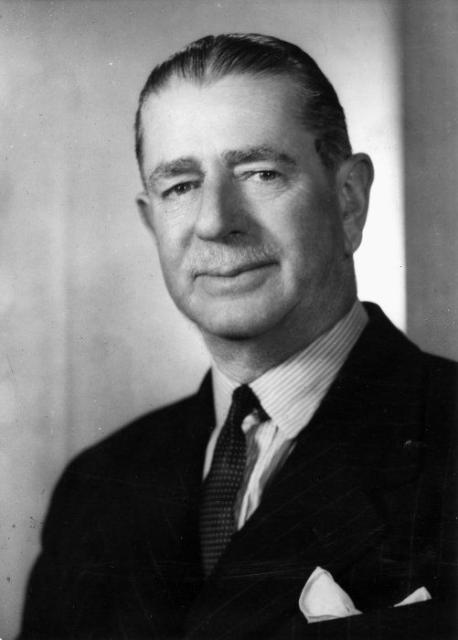
Joseph Gordon Coates
 New Zealand
- Joseph Gordon Coates: A Life of Service and Leadership
- Political Beginnings
- Shift to Reform Party
- Military Service and Political Ascendance
- Premiership
- Leadership Challenges
Joseph Gordon Coates: A Life of Service and Leadership
Early Life and EducationJoseph Gordon Coates, New Zealand's 21st Prime Minister, was born in Northland. His family's farming struggles forced him to provide for them early on. Despite his father's mental health challenges, he received education in local schools and from his mother. Coates excelled in equestrianism, though an accident left him with a lifelong leg injury. His fluency in Māori reflects his deep connection to the region's indigenous population.
Political Beginnings
Coates' political journey began in 1905 as an Otamauri County Councillor, becoming its Chairman from 1913-1916. He had previously gained recognition as the Commanding Officer of the Otamauri Mountain Mounted Infantry Regiment. As an Independent candidate, he was elected to Parliament from the Kaipara electorate in 1911, aligning with the Liberal Party. He initially supported the Liberals, even backing Prime Minister Joseph Ward's tenure extension. However, he declined a ministerial position when Thomas Mackenzie became Prime Minister.
Shift to Reform Party
Coates' alignment with the Liberal Party began to waver due to their opposition to freehold land ownership for farmers, a belief shaped by his family's negative experiences with land leases. During a no-confidence vote in 1912, he voted against the Liberals, contributing to the Reform Party's victory. In 1914, he formally joined Reform but remained a moderate, maintaining friendships across political divides. His primary focus was on improving conditions in northern New Zealand.
Military Service and Political Ascendance
With the outbreak of World War I, Coates sought to join the active army but was initially dissuaded by Prime Minister William Massey. However, in 1916, he received permission to serve and distinguished himself in combat, earning the Military Cross. His return as a war hero enhanced his reputation, and in 1919, Massey appointed him to Cabinet as Minister of Justice, Communications, and Telegraphs. He later held the portfolios of Public Works and Railways. In March 1921, Coates became Native Minister, where his knowledge of Māori proved invaluable. He befriended Āpirana Ngata and collaborated with him to address Māori concerns.
Premiership
Following Massey's death in 1925, Francis Bell acted as caretaker Prime Minister while the party elected a leader. On May 30th, Coates emerged victorious over William Nosworthy. His tenure focused on promoting New Zealand's agrarian economy, from which he hailed. He implemented projects like the Kopu Bridge on the Coromandel Peninsula to connect farmers.
Leadership Challenges
Despite his charm and governance skills, Coates lacked charisma and public speaking abilities. He retained much of Massey's Cabinet, which the public had hoped to see refreshed. His pragmatic, non-partisan approach to problem-solving disappointed some supporters who sought a more conservative direction. Some criticized him for failing to see the "big picture" and for concentrating on individual projects. In the 1925 election, the Reform Party won comfortably, largely due to Albert Davey's organizational skills and disarray among the Liberals.