Joseph Olbrich
 Austria
- Josef Maria Olbrich: A Master of Modernist Architecture
- Collaboration with Otto Wagner and the Vienna Secession
- The Secession Building and Artistic Triumph
- Darmstadt Artists' Colony and the Sposalizio Chapel
- Later Works and Architectural Legacy
Josef Maria Olbrich: A Master of Modernist Architecture
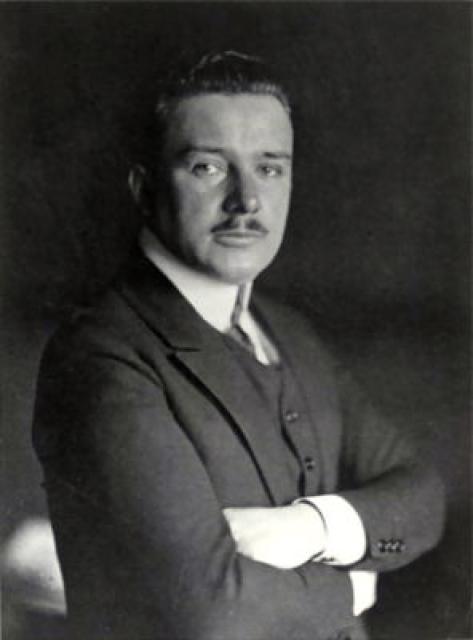
Early Life and EducationJosef Maria Olbrich, a prominent German-Austrian architect, was born in Opava, Austria-Hungary, in 1867. His architectural education commenced in Vienna, where he attended the School of Applied Arts and later the Academy of Fine Arts. Otto Wagner, a renowned architect, served as Olbrich's primary mentor during his academic years.
Collaboration with Otto Wagner and the Vienna Secession
After graduating, Olbrich declined a traditional trip to Rome and instead became an assistant in Wagner's workshop. He played a significant role in the design of the Vienna City Railway and its underground sections (1894-1897). His involvement in the "Vienna Secession," an avant-garde art movement, solidified his standing as a leading figure in Viennese modernism.
The Secession Building and Artistic Triumph
In 1897, Olbrich designed the iconic Secession Building, a symbol of the new art. Its cubic forms and gilded dome of laurel leaves became synonymous with modern architecture. The building's inauguration marked the widespread recognition of Olbrich's talent.
Darmstadt Artists' Colony and the Sposalizio Chapel
In 1899, Olbrich was invited to join the Darmstadt Artists' Colony founded by Ernst Ludwig, Grand Duke of Hesse. Over the next few years, he created a series of villas for artists on the Matildenhöhe hill, exemplifying the "modern dwelling" aesthetic—comfortable yet visually striking. The Sposalizio Chapel (1907), built to commemorate the wedding of Ernst Ludwig, stands as a masterpiece of Olbrich's architectural imagination. Its stepped semi-circles transform the tower into a sculptural form.
Later Works and Architectural Legacy
Olbrich's later works included the Tietz Department Store in Düsseldorf (1906 onward) and the Villa Koltze in the Cologne suburb of Marienburger (1908 onward). These projects were completed after his untimely passing in 1908. Olbrich's architectural innovations and commitment to modernism continue to inspire designers and architects today.