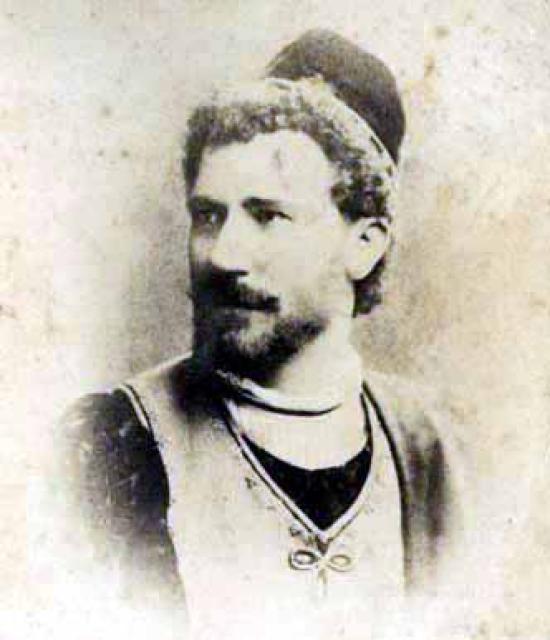
Julian Gayarre
 Spain
Spain- Biography of Julián Gayarre
- Early Life and Musical Beginnings
- Rise to Prominence
- International Success
- Later Years and Legacy
Biography of Julián Gayarre
Sebastián Julián Gayarre Garjón, a Spanish opera singer (tenor), was born on January 9, 1844, in the small Pyrenean town of Roncal, Navarre. Despite facing strong competition from renowned tenors such as Roberto Stagno, Italo Campanini, and Francesco Tamagno, Gayarre was considered by many music critics of the late 19th century to be the greatest tenor of the Italian school of his generation.
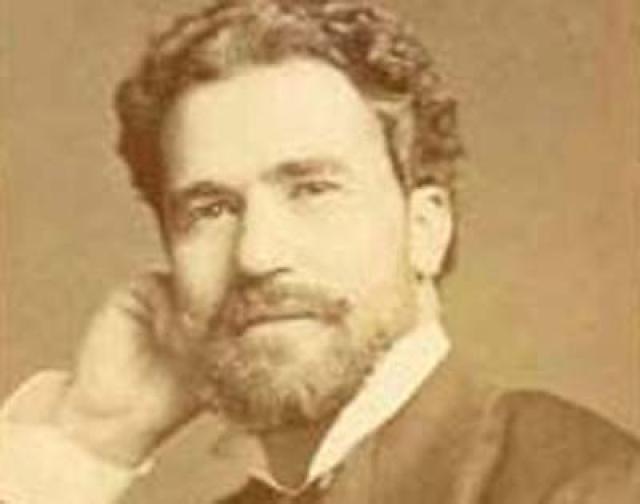
Early Life and Musical Beginnings
Gayarre was the third child of Mariano Gayarre and Maria Ramona Garjón, a modest couple. He left school at the age of 13 to work as a shepherd. At 15, his father sent him to Pamplona, where he found employment in a store. It was in Pamplona that he first became exposed to music. However, his passion for music cost him his job as he left the store to watch a passing ensemble. He then worked as a blacksmith in Lumbier and later returned to Pamplona to work in a foundry. One of his colleagues, upon hearing him sing, encouraged him to audition for the newly formed choir, "Orfeón Pamplonés," under the direction of Joaquin Maya. Maya, impressed by the young worker's beautiful voice, arranged for Gayarre to receive a scholarship to study at the Madrid Royal Conservatory under the renowned music teacher and composer Hilarión Eslava.
Rise to Prominence
Gayarre made his first public performance in 1867, using the stage name Sandoval, at the Tudela theater. After leaving the conservatory in 1868, he sang in the chorus of Madrid's zarzuelas. However, when the theater director dismissed him, Gayarre returned to Roncal with no money. Once again, Hilarión Eslava came to his aid. With the support of a group of Gayarre's fans, led by Conrado García, one of the founders of "Orfeón Pamplonés," they organized a successful solo concert in Pamplona. This convinced the Provincial Council of Navarre to fund his further education at the Milan Conservatory under Giuseppe Gerli. In 1869, immediately after completing his studies in Milan, Gayarre made his debut on the professional opera stage in L'elisir d'amore in Varese, Italy.
International Success
Gayarre's early successes and fame came from his performances in leading Italian opera houses. He became the first performer of the role of Marcello in Guglielmo Tell and the role of Enzo in La Gioconda. He was highly sought after in London, Paris, and his native Spain. He performed in Lisbon, Vienna, and Saint Petersburg and toured Brazil and Argentina. He frequently collaborated with Spanish contralto Elena Sanz, particularly at La Scala. In 1887, towards the end of his career, Gayarre sang Sobinin in the first London production of Glinka's A Life for the Tsar. He possessed a wide-ranging repertoire, excelling in bel canto works and early Wagner compositions. He was acclaimed for his performances in Verdi's operas, as well as works by Rossini, Bellini, Gounod, Meyerbeer, and others.
Later Years and Legacy
Gayarre's career peaked between 1873 and 1886, after which his voice deteriorated due to respiratory illnesses. He made his final appearance on December 8, 1889, at the Teatro Real in Madrid, singing Nadir in Bizet's Les pêcheurs de perles. His voice cracked, and Gayarre, kneeling before the audience, declared, "I can no longer sing." He retreated backstage, but the sympathetic crowd called him back on stage to hear him say, "This is the end." He passed away on January 2, 1890, at the age of 45, and was buried in Roncal, near his birthplace. In the 20th century, several Spanish filmmakers made movies based on his life, although they included fictional details. Gayarre's legacy lives on as one of the greatest tenors of his time.


