Kara Karaev
- Early Life and Musical Influences
- Musical Education and Folkloric Explorations
- Advanced Training in Moscow
- Active Role in Azerbaijani Music
- Recognition and Accolades
- Creative Legacy and Influence
- Stylistic Evolution and Pedagogical Impact
- Critical Writings and Legacy
Early Life and Musical Influences
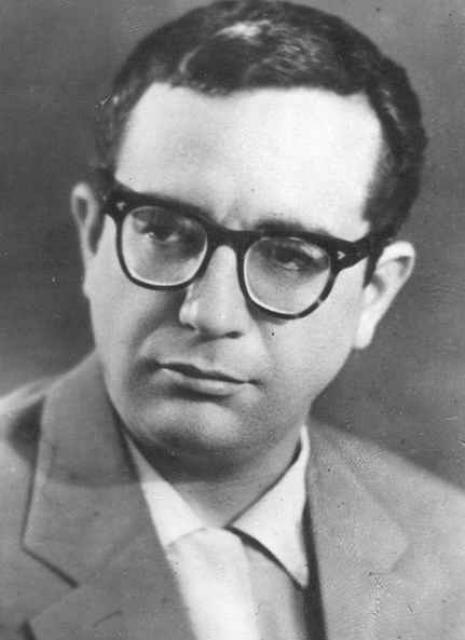
Kara Karayev: The Birth of an Azerbaijani Musical IconKara Karayev was born in 1918 into a family of renowned musicians. His father, a pediatrician, fostered Karayev's love for traditional Azerbaijani music. At the age of 12, he began piano lessons at the Baku Music College.
Musical Education and Folkloric Explorations
Shaping the Masterful ComposerIn 1935, Karayev enrolled at the Baku Conservatory, studying composition under Leopold Rudolf and folk music with Uzeyir Hajibeyov. His early compositions showcased the profound influence of Azerbaijani musical heritage. In 1937, he embarked on a folkloric expedition, delving into the rich world of ashughs and mughoms.
Advanced Training in Moscow
Refining His CraftIn 1938, Karayev moved to Moscow to study at the Moscow Conservatory. He honed his skills under the tutelage of Anatoly Alexandrov (composition), Sergei Vasilenko (instrumentation), and Dmitri Shostakovich (1942-1946). His graduation piece, the Second Symphony, demonstrated his exceptional talent.
Active Role in Azerbaijani Music
A Catalyst for Musical ProgressKarayev's unwavering commitment to Azerbaijani music manifested in his various roles. He served as the Artistic Director of the Baku Philharmonic Orchestra and taught at the Baku Conservatory. From 1949 to 1952, he acted as Rector, and from 1959 onwards, as Professor.
Recognition and Accolades
Celebrating a Musical GeniusIn 1959, Karayev's extraordinary contributions earned him the prestigious title of People's Artist of the USSR. He was also elected to the Azerbaijan National Academy of Sciences. Throughout his career, he received numerous awards, including Stalin Prizes (1946 and 1948), the Hero of Socialist Labor, and the Order of Lenin.
Creative Legacy and Influence
A Tapestry of Musical ExcellenceKarayev's musical legacy encompasses various genres. His works are characterized by their emotional intensity, balancing dramatic elements with lyrical sensitivity. Influenced by the great poet Nizami, his iconic works include the symphonic poems "Leyli and Majnun" and "Seven Beauties," as well as the eponymous ballet.
Stylistic Evolution and Pedagogical Impact
Bridging Tradition and ModernismKarayev's musical style evolved over time. While his early works showcased a deep connection to folk music, he later embraced a more rationalistic approach, experimenting with dodecaphony (Third Symphony and Violin Concerto). As an educator, Karayev played a pivotal role, mentoring notable composers such as his son Faraj and Aриф Мирзоyev.
Critical Writings and Legacy
Sharpening the Musical DiscourseBeyond his compositions, Karayev left behind a body of critical writings. His articles, published posthumously in 1988, provide invaluable insights into his musical philosophy and the Azerbaijani musical landscape.
Kara Karayev's legacy continues to inspire and shape generations of Azerbaijani musicians. His pioneering spirit and unwavering passion for music cemented his place as a towering figure in the annals of Azerbaijani cultural history.