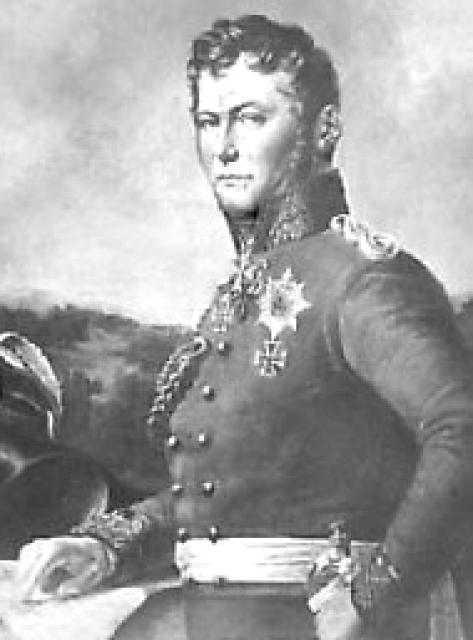
Karl Friedrich Knesebeck
 Germany
- Carl Friedrich von Knesebeck
- The Napoleonic Wars
- Army Reforms
- Diplomatic Negotiations
- Later Career
- Political Views
- Legacy
Carl Friedrich von Knesebeck
Early Life and Military CareerCarl Friedrich von Knesebeck, a Prussian field marshal and baron, was born into a noble family in 1768. He entered military service at a young age and rose quickly through the ranks, becoming a lieutenant general by 1806.
The Napoleonic Wars
During the War of 1806-1807, Knesebeck served as an attaché to the Russian army headquarters. In 1812, he was sent by the Prussian king to Emperor Alexander I of Russia to try to prevent a declaration of war with France. Knesebeck's efforts proved unsuccessful.
Army Reforms
After the Prussian defeat in 1806, Knesebeck played a crucial role in the reforms implemented by Gerhard von Scharnhorst to modernize the Prussian army. He helped develop plans for a new conscription system, as well as improved training and equipment for soldiers.
Diplomatic Negotiations
In early 1813, Knesebeck negotiated with Emperor Alexander I, leading to the signing of the Kalisch Treaty, which allied Prussia with Russia against Napoleon. He later conducted similar negotiations with Austria.
Later Career
Following the end of the Napoleonic Wars, Knesebeck was appointed commander of Prussian troops on the Russian border in 1831. In 1840, he was awarded the Order of Saint Andrew the First-Called, one of Russia's highest military honors.
Political Views
Knesebeck was an admirer of the policies of Austrian statesman Klemens von Metternich and sought to strengthen Prussia's ties with Austria. He believed in the importance of a conservative, traditional order and opposed liberal and democratic movements.
Legacy
Carl Friedrich von Knesebeck is remembered as a talented military leader and skilled diplomat who played a major role in the reforms and alliances that helped Prussia emerge as a leading power in Europe in the 19th century.