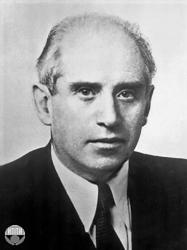
Karl Krause
 Germany
- Wilhelm Krause: Pioneer of Microscopic Anatomy
- Professor of Anatomy at Göttingen
- Groundbreaking Discoveries
- - Discovery of connective tissue fibers
- - The glands of the conjunctiva (Krause's glands)
Wilhelm Krause: Pioneer of Microscopic Anatomy
Early Life and EducationWilhelm Krause, a prominent German anatomist, was born and died in Hanover, Germany. He initially pursued his studies at the anatomical school in Hanover.
Professor of Anatomy at Göttingen
From 1820 to 1851, Krause served as Professor of Anatomy at the University of Göttingen. During this time, he published his influential textbook on human anatomy, "Handbuch der menschlichen Anatomie" (1841-1843). This work became a standard reference in the field for over half a century.
Groundbreaking Discoveries
Krause was renowned for his pioneering use of the microscope in his anatomical research. His seminal discoveries included:
- Discovery of connective tissue fibers
- The striation of cardiac muscle fibers- The origin of lymphatic vessels in intestinal villi (simultaneously with Henle)
- The glands of the conjunctiva (Krause's glands)
- The ganglion cell layer of the retina- The nerve cells of the Orbiculus ciliaris
Legacy
Krause's numerous and exemplary studies cemented his reputation as one of the leading anatomists of his time. His contributions to the field of human anatomy continue to be recognized and studied today.