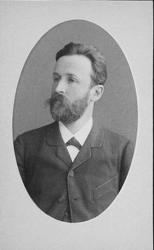
Karl Schwanzer
 Austria
- Karl Schwanzer: Austrian Architectural Icon
- Early Life and Education
- Professional Career
- Early Projects and Breakthrough
- Academic Achievements
- Iconic Buildings
BMW Headquarters and Museum
Other Notable Projects
- Legacy and Recognition
Karl Schwanzer: Austrian Architectural Icon
Karl Schwanzer (1918-1975) was a renowned Austrian architect known for his iconic architectural designs, including the BMW Headquarters and Museum.
Early Life and Education
Born into a humble family in Vienna in 1918, Schwanzer's passion for construction was sparked by his father and carpenter uncle, who taught him the trade. After completing high school, he enrolled in the Vienna University of Technology in 1936, graduating with a degree in architecture in 1940.
Professional Career
Schwanzer worked as a technician for several architectural firms during his studies. In 1941, he earned his Ph.D. for his dissertation on construction in post-war Upper Silesia. After serving in the Second World War, he established his own architectural practice in 1948.
Early Projects and Breakthrough
Initially working on smaller projects, Schwanzer's dedication to excellence eventually led to his breakthrough. His design for the Austrian pavilion at the 1958 Brussels World's Fair garnered him widespread acclaim.
Academic Achievements
In addition to his architectural work, Schwanzer became a full professor at the Vienna University of Technology, where he taught until his death. He also held guest professorships at universities in Darmstadt, Budapest, and Riyadh.
Iconic Buildings
From 1947 to 1975, Schwanzer designed several notable buildings that integrated functionality and structural aesthetics. He founded the Austrian Institute for Design and opened a second studio in Munich in 1967.
BMW Headquarters and Museum
Prior to the 1972 Munich Olympics, Schwanzer designed the 101-meter BMW Headquarters tower, an architectural landmark that resembles a race car's tires and engine block. The tower comprises four 22-story cylinders, two for parking and 18 for offices. The nearby BMW Museum, a futuristic aluminum dome, was also conceived by Schwanzer.
Other Notable Projects
Schwanzer's other projects include the Educational Center and Workshop for the Institute of Economic Promotion in St. Pölten, designed for maximum efficiency and flexibility. In 1975, he designed the Austrian Embassy in Brazil, a striking white building that contrasts with the vibrant backdrop.
Legacy and Recognition
Karl Schwanzer passed away on August 20, 1975. He was posthumously awarded the Grand Austrian State Prize for Architecture. In 2008, a street in Vienna's 10th district was named in his honor.