Karlos Haskok
 USA
USABiography of Carlos Hathcock
Carlos Hathcock, one of the most famous snipers in the history of the US armed forces, was born in Little Rock, Arkansas. As a teenager, he hunted squirrels and rabbits with a small-caliber rifle. From a young age, Hathcock had a dream of serving in the Marine Corps. On his 17th birthday in 1959, he fulfilled his dream by enlisting in the US Marine Corps. His natural abilities and experience gained from hunting made Hathcock an excellent marksman and he won several army shooting championships.
In 1966, Hathcock was sent to Vietnam where he successfully applied his skills in combat. He initially served in the military police, then became an instructor at the Marine Corps Sniper School, and later became the commander of a sniper platoon. During his time in Vietnam, Hathcock served one full tour and one partial tour, with confirmed kills of 93 enemy soldiers. Additionally, he had at least 300 unconfirmed kills, as the American command policy required enemy losses to be based on body counts, which was not always possible. The National Liberation Front of South Vietnam offered a $50,000 reward for Hathcock's head.
Hathcock's most notable achievements include winning a duel against a North Vietnamese sniper by shooting through the enemy's rifle scope, killing an enemy soldier at a distance of 2,300 meters (considered a sniper record at the time, officially surpassed in 2002), and killing a North Vietnamese general. He earned the nickname "White Feather" from the Vietnamese for his habit of wearing a feather in his hat, breaking the conventional rules of sniper camouflage.
His second tour in Vietnam ended prematurely in September 1969 when the armored personnel carrier he was riding in hit a mine. Despite suffering severe burns (over 40% of his body), Hathcock pulled seven of his comrades out of the burning vehicle. This marked the end of his service in Vietnam. Hathcock remained in the Marine Corps until 1979 when he was forced to retire due to health deterioration caused by combat injuries. In retirement, Hathcock battled severe depression but continued to maintain ties with the Marine Corps until his death in 1999 in Virginia Beach, Virginia.
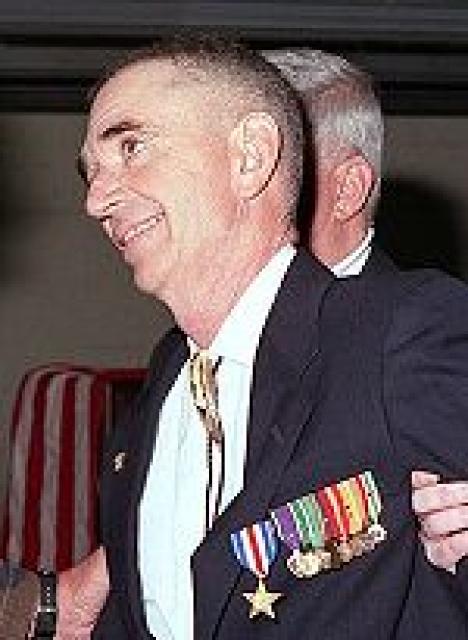
Although Carlos Hathcock is often cited as the most successful American sniper in Vietnam, this claim can be questioned. Practically unknown sniper Chuck Mawhinney had 103 confirmed kills during the Vietnam War, but had fewer unconfirmed kills than Hathcock. Another lesser-known sniper, Adelbert Waldron, had 109 confirmed kills. Regardless, Hathcock remains one of the most renowned Marines in the history of the US Marine Corps. Several shooting ranges and a sniper award have been named in his honor. Interestingly, for his participation in the Vietnam War, he received only one combat award, apart from the standard Purple Heart for being wounded. Even this lone award, the Silver Star (the third-highest military decoration in the US armed forces), was presented to him only in 1996 under pressure from a public movement demanding that he be awarded the highest American honor, the Medal of Honor. Ironically, Hathcock was awarded not for his sniper achievements, but for saving comrades from a burning armored personnel carrier - an act for which he himself did not want any recognition.
In 1962, Carlos Hathcock married Jo Winstead. Their son, Carlos Hathcock III, followed in his father's footsteps by joining the Marine Corps.
In the world of cinema, Steven Spielberg confirmed that the sniper duel scene in the movie "Saving Private Ryan" was based on a well-known episode from Carlos Hathcock's combat biography, where he killed an enemy sniper by shooting through his rifle scope. A similar scene is present in other American films, such as "Sniper" and "Enemy at the Gates."