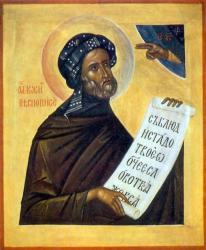
Kaviraja Goswami Krishnadasa
 India
India- Early Life and Family
- Theological Beliefs and Rupture with his Brother
- Spiritual Initiation and Life in Vrindavana
- Monumental Work: "Chaitanya-charitamrita"
- Legacy and Eternal Form
Early Life and Family
Krishnadasa Kaviraja Gosvami, a revered Vaishnava writer and saint, was born in 1518 in Jamatpur village, West Bengal. His father, Bhagiratha, was a physician, and his mother was Sunanda. He had a younger brother named Shyamadasa. After their parents' untimely demise, the brothers were raised by their extended family.
Theological Beliefs and Rupture with his Brother
Krishnadasa's profound devotion to Lord Chaitanya Mahaprabhu and his close associate Nityananda Prabhu is evident in his writings. His brother, Shyamadasa, once engaged in a contentious debate about the ontological status of Chaitanya and Nityananda with an esteemed Vaishnava named Minaketana Ramadasa. Shyamadasa's perceived slight against Nityananda deeply offended Krishnadasa, who renounced his brother.
Spiritual Initiation and Life in Vrindavana
After this incident, Krishnadasa received blessings from Nityananda in a dream, instructing him to embark on a pilgrimage to Vrindavana. In 1541, he left Bengal and settled in Vrindavana, where he received spiritual initiation from Ragunatha Dasa Gosvami, one of Chaitanya's closest disciples. He dedicated his life to spiritual practices in Vrindavana.
Monumental Work: "Chaitanya-charitamrita"
Despite his advanced age and declining health, Krishnadasa undertook the monumental task of composing "Chaitanya-charitamrita," a biographical work on the life and teachings of Lord Chaitanya. He drew upon the records of Svarupa Damodara and Murari Gupta, who had been close companions of Chaitanya. Through his guru, Ragunatha Dasa Gosvami, Krishnadasa gained further insights into Chaitanya's life, as Ragunatha had assisted Svarupa Damodara during his time as Chaitanya's personal secretary.
Before commencing his writing, Krishnadasa sought the deity of Madana-mohana's permission in Vrindavana. Miraculously, the deity's garland fell onto Krishnadasa's neck, which the temple priest interpreted as a sign of approval and blessing.
Legacy and Eternal Form
Krishnadasa Kaviraja Gosvami is considered one of the six Gosvamis of Vrindavana, who played a pivotal role in preserving and disseminating Chaitanya's teachings. He is believed to have assumed the eternal form of Ratnarekha-manjari or Kasturi-manjari in Krishna's pastimes. His writings continue to inspire and guide Vaishnava followers to this day.