Khalil Gibran
 USA
USABiography of Khalil Gibran
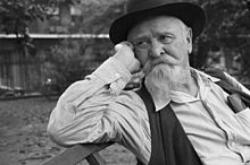
Khalil Gibran, a Lebanese-American philosopher, artist, poet, and writer, was born in the town of Bsharri in the northern part of present-day Lebanon. His mother, Kamila, gave birth to him at the age of 30, from her third husband. The Gibran family was quite poor, so formal education was not possible for Khalil. However, the local priests worked diligently and he grew up with a good knowledge of the Bible, as well as proficiency in Arabic and Syriac languages. Khalil's father worked at a local pharmacy for a while, but his gambling addiction led to significant debts. Eventually, he had to find employment with an Ottoman official. In 1891, due to constant complaints from the population, the official was dismissed, and his assistants attracted the attention of the investigators. In the end, Khalil's father was arrested on charges of embezzlement and the authorities confiscated what little was left of his family's belongings. Left without a home, Kamila Gibran decided to move to the United States to live with her brother. In 1894, her husband was released from prison, but Kamila refused to give up her plan. The Gibran family moved to Boston on June 25, 1895. At that time, Boston had one of the largest Syrian-Lebanese communities in the country. Kamila found a job, and Khalil finally went to school in special classes for immigrants.
Early Life and Education

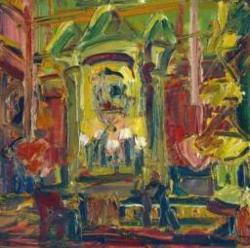
During his time in Boston, Khalil spent a lot of time in a nearby art school, where he became familiar with the works of the prominent artist, photographer, and publisher Fred Holland Day. Day supported Khalil in his artistic endeavors, and some of Khalil's paintings adorned book covers in 1898. Although Khalil's relatives did not object to his artistic pursuits, they were sometimes irritated by their clear Western orientation. To immerse him in his native culture, Khalil was sent to Lebanon at the age of 15.
Poetic Career
Upon entering the Beirut Institute, Khalil began publishing a student magazine and soon earned a reputation as one of the college's best poets. Khalil returned to Boston in 1902. The joy of his return was greatly overshadowed by further events - just two weeks later, Khalil buried his sister Sultana, who died of tuberculosis. A year later, the same disease claimed the life of Khalil's brother Peter, and his mother also died of cancer.
Khalil organized his first solo exhibition in 1904 in Fred Holland Day's studio. It was at this exhibition that he met school principal Mary Elizabeth Haskell. Their friendship, which extended to a close relationship, lasted until Khalil's death. Haskell had a significant influence not only on Khalil's life but also on his creativity. Khalil initially wrote in Arabic, but most of his works published after 1918 were in English. A major theme in Khalil's work was always his Christian faith, especially the question of spiritual love. His most famous work, the collection of poetic essays "The Prophet," was published in 1923 and continues to be reprinted regularly. The book has been translated into 40 different languages and is still one of the best-selling books of the 20th century, at least in the United States.
Political Views and Legacy
Khalil was not limited to art alone - political issues also played an important role in his life. He called for the recognition of Arabic as the national language of Syria, including its teaching in schools from early grades. Despite his desire for peace in the "young nations" like his native Lebanon, Khalil was convinced that the Ottoman regime would ultimately be overthrown. During World War I, Syria was indeed liberated, and Khalil expressed his joy in a sketch that made the cover of a special "victory" edition of "al-Sa'ih."
Khalil Gibran passed away in New York on April 10, 1931, at the age of 48. He died from cirrhosis of the liver, aggravated by tuberculosis. Before his death, Khalil expressed his wish to be buried in Lebanon, which was fulfilled in 1932. Mary Haskell and Mariana, Khalil's sister, purchased a Lebanese monastery and turned it into the Gibran Museum.