Vlaho Bukovac
 Czech
Czech- Vlaho Bukovac: The Master of Croatian Art
- Early Life and Education
- Parisian Success
- The Influence of Impressionism and Pointillism
- Zagreb: A Hub of Artistic Activity
- Conflict and Return to Cavtat
- Prague: A New Chapter
- Legacy and Recognition
Vlaho Bukovac: The Master of Croatian Art
Vlaho Bukovac (1855-1922) is widely recognized as the most prominent Croatian painter of the late 19th and early 20th centuries, leaving an indelible mark on the Croatian art scene. His mastery of Impressionism and Post-Impressionism techniques cemented his legacy as a visionary artist.
Early Life and Education
Bukovac was born in Cavtat, near Dubrovnik, in 1855. His artistic journey began in Paris in 1877, where he received a scholarship from Croatian politician and writer Medo Pučić. He honed his skills at the École des Beaux-Arts under the tutelage of renowned artist Alexandre Cabanel.
Parisian Success
During his time in Paris, Bukovac gained recognition for his talent through exhibitions at the prestigious Salon, earning critical acclaim from art critics. His success paved the way for extensive travels throughout Europe, where he absorbed the influences of different artistic movements.
The Influence of Impressionism and Pointillism
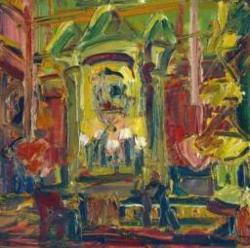
Bukovac's early training in the academic tradition notwithstanding, he embraced the liberating techniques of Impressionism. He became particularly adept at Pointillism, a technique that characterizes his unique style. This expressive approach became a prominent trend in Western Balkan art, with Bukovac, Slovenian Impressionists, and Serbian painter Nadežda Petrović leading the charge.
Zagreb: A Hub of Artistic Activity
From 1893 to 1897, Bukovac resided in Zagreb, where he became a pivotal figure in the city's artistic landscape. He established an art school and played a key role in founding the Art Pavilion, which remains one of the most prestigious galleries in Croatia. In 1893, he organized the first Croatian art exhibition at the Palace of the Academy.
Conflict and Return to Cavtat
Despite his contributions, Bukovac faced conflicts that led to his departure from Zagreb. He returned to his hometown of Cavtat, where he lived and worked from 1898 to 1902. This period marked a shift in his focus towards landscape painting.
Prague: A New Chapter
In 1903, Bukovac moved to Prague, where he was appointed Professor at the Academy of Fine Arts. This period saw him concentrate on portraiture, leaving a lasting legacy in the Czech art scene. He continued to reside in Prague until his death in 1922.
Legacy and Recognition
Bukovac's influence on Croatian art is undeniable. His masterful use of Impressionism and Pointillism techniques revolutionized the artistic expression of his time. His works have been widely exhibited and celebrated, solidifying his status as one of the most influential Croatian artists of all time. In 1994, Croatian filmmaker Bogdan Žižić immortalized Bukovac's life and work in the documentary "Vlaho Bukovac."