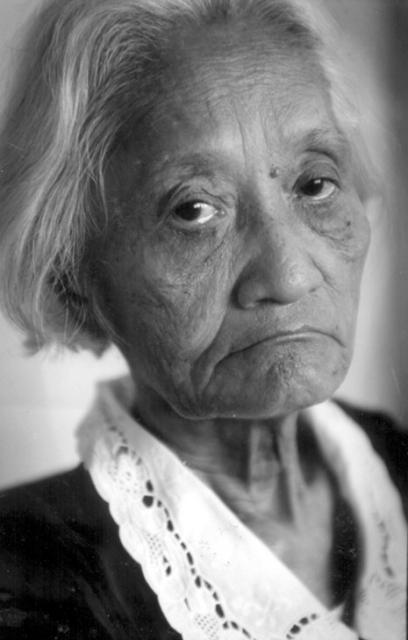
Khieu Ponnary
 Cambodia
- Khieu Ponnary: A Life of Revolution and Controversy
- Departure to Paris and Activism
- Return to Cambodia and Political Role
- Rise and Fall with the Khmer Rouge
- Decline and Legacy
Khieu Ponnary: A Life of Revolution and Controversy
Early Life and EducationKhieu Ponnary was born in 1920 in Battambang province, Cambodia. Her father was a judge who abandoned the family during World War II, fleeing with a Cambodian princess. As a member of an intellectual family, she attended the prestigious Sisowath Lycée and became the first Cambodian woman to earn a baccalaureate degree in 1940.
Departure to Paris and Activism
In 1949, Ponnary left Cambodia with her younger sister, Khieu Thirith, for Paris, where she studied Khmer linguistics. Her sister married Ieng Sary in 1951 and changed her name to Ieng Thirith. In 1956, Ponnary married Saloth Sar (later known as Pol Pot), choosing July 14, Bastille Day, for their wedding. The two sisters and their husbands became known as the "Cambodian Gang of Four."
Return to Cambodia and Political Role
Ponnary returned to Sisowath Lycée as a teacher, but her party activities in the 1960s remain obscure. By 1973, she served as the Khmer Rouge secretary for Kompong Thom province. Following the 1970 coup, she fled with her husband to the jungle, where she developed schizophrenia, believing the Vietnamese were trying to kill her.
Rise and Fall with the Khmer Rouge
Despite her illness, Ponnary was appointed as Chairwoman of the Kampuchean Women's National Association in 1976 and hailed as the "Mother of the Khmer Revolution" in 1978. She remained a close associate of the regime, even though she did not hold a significant role in policymaking.
Decline and Legacy
Ponnary divorced Pol Pot in 1979 after the Vietnamese invasion. She was granted amnesty by the Cambodian government in 1996, along with her sister and brother-in-law. She passed away from cancer on July 1, 2003, at the age of 83. Her role in the Cambodian genocide, estimated to have claimed between 1.7 and 3 million lives, remains a subject of controversy.