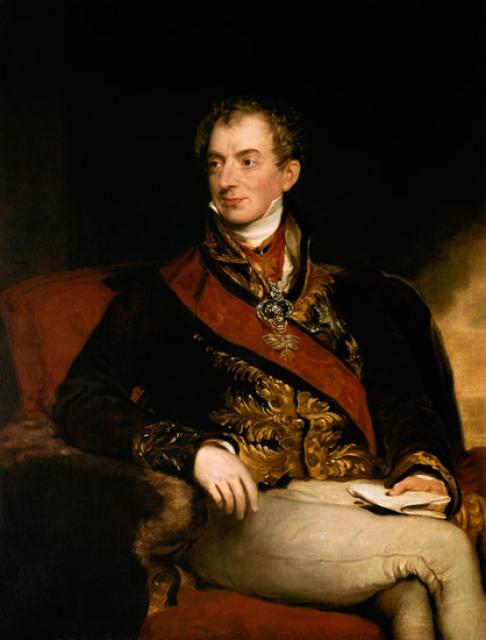
Klemens Metternich-Winneburg
 Austria
- Klemens von Metternich: Political Genius and Notorious Statesman
- Chief Austrian Foreign Minister
- Diplomatic Masterstroke: The Holy Alliance
- Controversial Policies
- Personal Life and Intrigues
- Role in the Persecution of Niccolò Paganini
- Exiled and Return
Klemens von Metternich: Political Genius and Notorious Statesman
Early Life and Diplomatic AcumenKlemens Wenzel Lothar von Metternich-Winneburg was born into an aristocratic Austrian family in 1773. His diplomatic career took off after serving as Austrian ambassador to France from 1806 to 1809. During this time, he established close ties with French emperor Napoleon Bonaparte.
Chief Austrian Foreign Minister
In 1809, Metternich was appointed foreign minister of Austria. He became effectively the de facto leader of the government, skillfully navigating Austria through the turbulent Napoleonic era. He played a pivotal role in forming and dissolving anti-Napoleonic coalitions, ultimately contributing to Bonaparte's downfall.
Diplomatic Masterstroke: The Holy Alliance
Metternich's crowning diplomatic achievement was the formation of the Holy Alliance in 1815. This alliance between Russia, Austria, and Prussia aimed to maintain the balance of power in Europe and suppress revolutionary movements.
Controversial Policies
Metternich's legacy is marred by his authoritarian approach to domestic policy. He established a secret police known as the "thought police" to suppress political dissent. His policies drew comparisons to the notorious French minister of police, Joseph Fouché.
Personal Life and Intrigues
Metternich was known for his charm and ability to use his personal relationships for political gain. He had affairs with several prominent women, including Laura d'Abrantès, wife of Napoleon's general Jean Andoche Junot.
Role in the Persecution of Niccolò Paganini
Metternich's involvement in the persecution of the celebrated violinist Niccolò Paganini remains a controversial chapter in his life. He suspected Paganini of supporting Italian revolutionaries and thwarted his concert performances.
Exiled and Return
After the 1848 revolution, Metternich fled to England and later to Belgium. He returned to Vienna three years later and lived out the rest of his life as a private citizen. He died in 1859 at the age of 86.