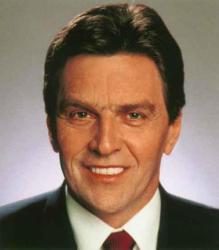
Konstantin Pyats
 Estonia
- Biography of Konstantin Päts
- Early Career
- Return to Estonia
- Political Career
- Prime Minister and President
- Later Years
Biography of Konstantin Päts
Konstantin Päts (1871-1957?) was an Estonian political figure who served as the first and last President of the Republic of Estonia. He was born into a family of construction contractors in the Pärnu County. Päts graduated from the Faculty of Law at the University of Tartu in 1898.
Early Career
Päts started his career as an assistant to lawyer J. Poska in Tallinn. He also worked as an editor for the newspaper "Teataja" from 1901 to 1905. During this time, he served as a councilor for the Tallinn City Council and later became the deputy mayor in 1905. However, after being sentenced to death in absentia following the events of 1905, Päts went into hiding in Switzerland and Finland.
Return to Estonia
After the death sentence was lifted, Päts returned to Russia in 1909 and faced trial before a civilian court. He was sentenced to one year of imprisonment. From 1911 to 1916, Päts worked as an editor for the newspaper "Tallinna Teataja." In 1916, he was mobilized for war and served as a sub-lieutenant in the staff of the Tallinn Fortress.
Political Career
In March 1917, Päts was elected as the chief of police in Tallinn. He later became a member and chairman of the Supreme Committee of Estonian Soldiers. From 1917 to 1919, Päts served as a member of the Temporary Provincial Council and became the head of the Provincial Government in the fall of 1917. However, he was arrested by the Bolsheviks in December but managed to escape and went underground. It was during this time that he prepared for the proclamation of Estonia's independence on February 24, 1918.
As the chairman of the Committee of Salvation and the Prime Minister of the Temporary Government, Päts played a crucial role in the critical period for Estonia until May 1919. He was awarded two Crosses of Liberty for his exceptional services. In the Constituent Assembly from 1919 to 1920, Päts served as a deputy representing the Land Union. Based on this union, he founded a strong agrarian party, the Assembly of Agrarians, in 1920. Päts served as a deputy in all five sessions of the State Assembly and was the chairman from 1922 to 1923.
Prime Minister and President
Päts held the position of Prime Minister from 1921 to 1922, 1923 to 1924, 1931 to 1932, 1932 to 1933, and 1933 to 1934. After the acceptance of the constitution by referendum in 1933, which granted significant powers to the president, Päts became the acting head of state in January 1934. In order to prevent the certain victory of the participants of the War of Independence (whose candidate was Major General A. Larka and was supported by the Center Party) and its dire consequences, Päts, using his almost dictatorial powers as the president under the new constitution, orchestrated a coup d'état on March 12, 1934, together with Johan Laidoner.
The War of Independence movement was liquidated, and all elections were postponed indefinitely. Martial law was imposed for a year, but it was renewed annually until 1940. The 5th session of the State Assembly, whose powers were also extended, approved Päts and Laidoner's actions, but it was dissolved in October 1934 and never reconvened. The following years saw the prohibition of political parties, the introduction of censorship, and the growing influence of Päts' personal power.
Later Years
In February 1936, at Päts' initiative, a referendum was held to approve the creation of a bicameral National Assembly, which was responsible for drafting a new constitution. The constitution was adopted by the National Assembly in July 1937 and came into effect on January 1, 1938. According to the transitional period law, Päts became the State Custodian in September 1937 and was elected as the President of the Republic for a six-year term in April 1938.
In September 1939, Päts agreed to sign a treaty with the Soviet Union regarding military bases, which was followed by the Soviet military occupation in June 1940. Although he remained the nominal head of state in June and July, all decisions were made by the occupying authorities. On July 30, even before Estonia formally joined the Soviet Union, Päts, along with his family and servants, was deported to the Soviet Union. He was initially exiled to Ufa and later imprisoned in Sverdlovsk, Kazan, and Stavropol prisons. In the spring of 1956, he was brought back to Estonia and placed in a facility for chronically mentally ill patients in Jämejala, near Viljandi.
After many people who knew him previously started visiting him, he was removed from the facility by the authorities and, according to some sources, was held in the Tallinn Prison in November. He was then reportedly sent to Leningrad, and according to other rumors, to Strenci (Latvia). It is presumed that he died the following year. Soviet sources indicate his death as 1957, but the Estonian Soviet Encyclopedia "corrects" this date to 1956. Three documents written by Päts in prison, including his political testament, appeals to the Estonian people, and the United Nations, were known in the West.