Leontij Dubelt
 Russia
- Early Life and Military Career
- Involvement in Freemasonry and Military Suspicions
- Transition to Secret Police
- Reign of Terror and Political Suppression
- Ethical Ambiguity and Legacy
- Retirement and Historiography
Early Life and Military Career
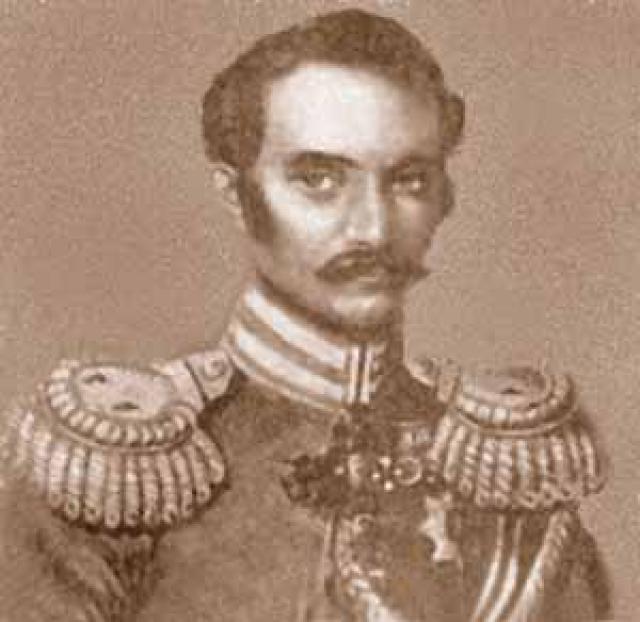
Leonty Vasilievich Dubelt, born in 1792, was a prominent figure in the Russian secret police. He received his education at the Mining Corps and took part in the wars of 1807 and 1812-1815, rising to the rank of regimental commander.
Involvement in Freemasonry and Military Suspicions
Dubelt initially associated with military Masonic and liberal circles, serving as the provincial master of the Kiev lodge of United Slavs from 1820-1822. Despite being labeled a "loudmouth" in the army and being anticipated for arrest following the collapse of the Decembrist organization, Dubelt remained unapprehended and continued his military service until 1828.
Transition to Secret Police
After a brief resignation and financial hardship, Dubelt joined the gendarme corps in 1830. In 1835, he was appointed chief of staff of the gendarmerie corps and subsequently director of the Third Section of the Imperial Chancellery in 1839. Additionally, he became a member of the Main Directorate of Censorship and the Secret Committee on Schismatics.
Reign of Terror and Political Suppression
In the midst of political intrigue and suppression of social thought, Dubelt maintained traces of religious yearnings, humanity, and sentimentality, as evidenced by his personal notes and letters. Nevertheless, he fiercely opposed any social movement, employing a system of surveillance and terror. His concerns about the potential for revolution created a climate of fear that drove his relentless efforts to suppress dissent.
Ethical Ambiguity and Legacy
Despite glimpses of personal struggle and a critique of government shortcomings in his private writings, Dubelt firmly embraced the dominant political agenda and implemented policies of state security. The extent of his personal integrity remains debated, with accusations of corruption beyond his political adversaries' opinions. His role in combating the press played a significant part in his tenure at the Third Section.
Retirement and Historiography
In 1856, the leadership position of the Third Section became vacant. However, due to the court's apprehension over Dubelt's influence, he did not receive the appointment and retired from his post. References to Dubelt's letters to his wife and personal notes, along with memoirs, contemporary sources, and publications by notable historians, provide valuable insights into his enigmatic persona and the evolution of his political views.