Louise Thompson Patterson
 USA
- Education and an early stand
- Harlem and the arts
- International politics and organizing
- A lifetime of commitment
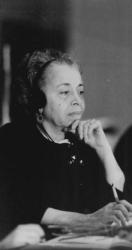
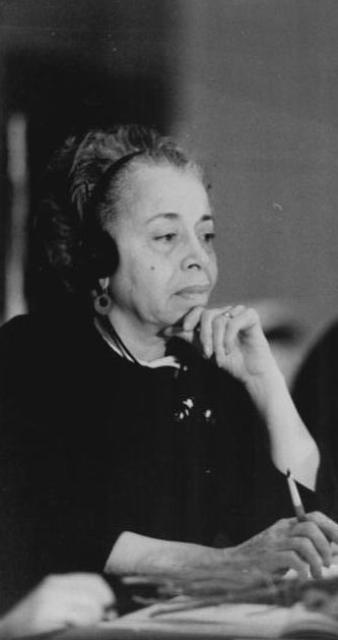
Louise Alone Thompson Patterson was an American educator, organizer and communist whose life connected the Harlem Renaissance with decades of Black radical politics and civil-rights activism. Born in Chicago on 9 September 1901, she moved through a wide range of communities before settling in Harlem, where she built lasting relationships with writers, artists and political organizers. She died in New York on 27 August 1999, a few days short of her 98th birthday.
Education and an early stand
After growing up in the Pacific Northwest, Thompson entered the University of California, Berkeley, in 1919, when Black women were still rare on campus. She studied economics and graduated with honors in 1923. A lecture by W. E. B. Du Bois helped crystallize her interest in racial justice and political organizing.
She taught at Arkansas State College in Pine Bluff and then at Hampton Institute in Virginia. At Hampton, students protested policies that required them to sing plantation songs for white visitors. Thompson supported the students, a stance that cost her job in 1928. The episode sharpened her opposition to the paternalism and racism she encountered in education and social work.
Harlem and the arts
Thompson moved to New York in 1928 and became part of the creative and intellectual life of Harlem. She studied at the New School for Social Research on a scholarship from the Urban League and worked closely with figures including Langston Hughes, Zora Neale Hurston, Dorothy West and the artist Aaron Douglas. Her Harlem apartment became a gathering place for Black artists and political thinkers, with evenings of music, readings and debate.
Her marriage to writer Wallace Thurman in 1928 lasted about six months. Her friendship with Hughes continued for decades. After returning from political work abroad, she helped him establish the Harlem Suitcase Theatre, which staged plays by Hughes and other Black writers with all-Black casts. The company used theatre to challenge the racial stereotypes that limited Black performers on American stages.
International politics and organizing
Thompson joined the Communist Party USA and became active in labor and civil-rights causes. In 1932, she organized a group of Black writers and artists who traveled to the Soviet Union to make a film about racism in the United States. The project, titled *Black and White*, was never completed, but the journey reflected her belief that international alliances could help expose American racial injustice. Her political commitments later earned her the media nickname “Madame Moscow.”
She worked with organizations including the International Labor Defense, the Civil Rights Congress and the International Workers Order, taking part in campaigns against Jim Crow and in support of workers. After marrying attorney and fellow communist William L. Patterson in 1940, she continued to organize amid the political pressure of the Red Scare. They had a daughter, Mary Louise. In 1951, she helped establish Sojourners for Truth and Justice, a group of Black women activists who opposed racism and political repression.
A lifetime of commitment
Patterson remained active across generations of Black political life, from the Harlem Renaissance and labor movements to later civil-rights and anti-repression campaigns. She never renounced her Communist Party membership. Her work as an educator, cultural organizer and activist made her a bridge between the artistic ferment of Harlem and the broader struggle for racial and economic justice.