Lucio Fulci
 Italy
Italy- Lucio Fulci: The Godfather of Gore Horror
- Screenwriting Debut and Comedy Films
- Explorations in Genre and Controversies
- Recognition and Collaboration
- International Fame and Gore Masterpieces
- Later Years and Legacy
Lucio Fulci: The Godfather of Gore Horror
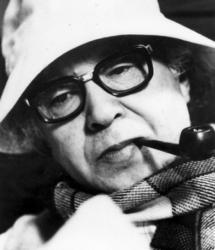
Early Life and EducationBorn in Rome on June 17, 1927, Lucio Fulci experienced a Catholic upbringing and identified as a devout Catholic throughout his life. Despite this, he was also known for his youthful Marxist leanings, and some of his films, such as "Beatrice Cenci," were considered anti-Catholic. Fulci's interest in the arts and cinema was evident from a young age, but his mother's insistence pushed him towards a career in medicine. He reluctantly studied medicine but eventually abandoned the field to briefly work as an art critic. He later obtained a degree in the humanities and philosophy.
Screenwriting Debut and Comedy Films
In the early 1950s, after graduating from the Experimental Film Center, Fulci began his career as a screenwriter. He predominantly wrote for comedic films that became classics of Italian cinema, including "An American in Rome," "Totò all'inferno," and "Sins of Casanova." Through these experiences, he also gained experience in directing. Fulci directed dozens of comedies, many featuring the famous comedic duo Franco Franchi and Ciccio Ingrassia.
Explorations in Genre and Controversies
In 1969, Fulci expanded his cinematic repertoire by directing several giallo films, including "Lizard in a Woman's Skin" and "The Psychic." He also ventured into the action genre with works like "White Fang" and "Massacre Time." These films were both commercially successful and highly controversial due to their explicit depictions of violence and religion. Notably, the realistic special effects in "Lizard," which involved mutilated dogs, led to Fulci facing charges of animal cruelty. He had to present the mockups used in the film during his trial to prove that the "tortured dogs" were not real.
Recognition and Collaboration
Fulci's first film to gain significant recognition in Italy was the 1972 mystery thriller "Don't Torture a Duckling." His most successful collaborations were with screenwriter Dardano Sacchetti. Their first joint venture was the 1977 thriller "Sette Notte In Nero," which gained immense popularity among younger audiences. However, after Sacchetti's departure from Fulci's team in 1983, the director's films notably declined in quality. Additionally, a film scandal erupted between them, with allegations of stealing screenplay ideas, but the case never reached court.
International Fame and Gore Masterpieces
In 1979, Fulci achieved international fame with the film "Zombi 2," which was marketed as a sequel to George Romero's "Dawn of the Dead." Its graphic depictions of decaying corpses, maggots, and graphic dismemberment attracted a dedicated cult following. Following "Zombi 2," Fulci directed several more ultra-violent horror films, often featuring the undead. These included "City of the Living Dead" in 1980, "The Beyond," "The House by the Cemetery," and "The Black Cat" in 1981, and "The New York Ripper" in 1982.
Later Years and Legacy
By the late 1980s, Fulci's health was declining as he battled hepatitis and diabetes. He directed more graphic television films, which were often rejected for distribution due to their extreme content. Personal and financial troubles also plagued him. His wife, who had been dying from cancer, committed suicide in 1968 after ten years of marriage, which deeply affected him. Fulci died from complications of diabetes on March 13, 1996, in the solitude of his home in Rome. Rumors emerged that the 68-year-old director, who also suffered from severe depression in his final years, intentionally allowed himself to die by neglecting his insulin injections.
Quentin Tarantino, whose own action films often rival Fulci's in gore, has frequently cited the Italian director's work as an inspiration. In January 1996, just months before his death, fans celebrated Fulci as royalty at New York's Fangoria Horror Convention. Upon seeing the thousands of people in attendance, Fulci expressed his surprise and realization that his films were far more popular outside of Italy than he had ever imagined.