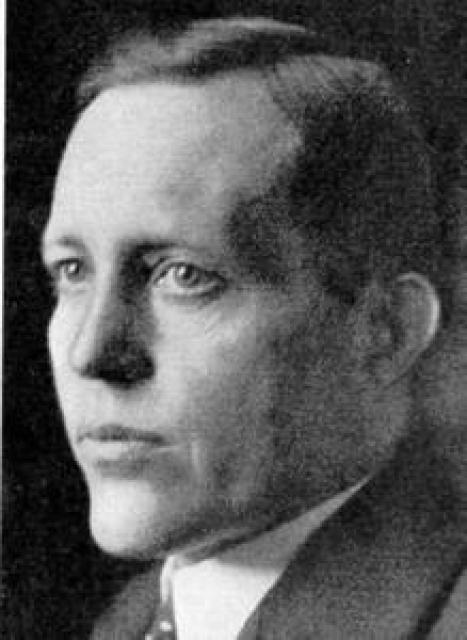
Ludwig Schwerin von Krosigk
 Germany
- Biography of Ludwig Schwerin von Krosig
- Early Life and Education
- Political Career
- Later Life and Legacy
Biography of Ludwig Schwerin von Krosig
Ludwig Schwerin von Krosig was a German lawyer and politician, who served as the Minister of Finance under Adolf Hitler and was the last head of the government of the Third Reich. He was born into the family of Erich Adolf von Krosig (1829-1917) and his second wife, Louise, born Countess von Schwerin (1853-1920). His father was the son of Baroness Lisette von Westphalen (1800-1863) and therefore the nephew of Jenny von Westphalen, the wife of Karl Marx.
Early Life and Education
On May 27, 1925, he was adopted by his childless uncle, Count Alfred von Schwerin, and thereafter was known as Count Schwerin von Krosig. He studied at a monastery school in Rossleben, Thuringia, from 1893. He pursued studies in jurisprudence and political science at the universities of Halle, Lausanne, and Oxford. In 1909, he joined the Prussian civil service as a legal officer in Naumburg, after completing his military service in the 2nd Pomeranian Ulan Regiment. In 1910, he was appointed as a government legal officer in Stettin.
Political Career
During World War I, Schwerin von Krosig participated as an officer and was wounded. He was awarded the Iron Cross 1st and 2nd class for his distinguished service. After demobilization in 1919, he became an assessor in the provincial administration in Hindenburg Upper Silesia. From 1921, he worked in the Imperial Ministry of Finance and held various positions, including Oberregierungsrat and Ministerialrat. From January 1, 1929, he served as the director and head of the budget department in the Imperial Ministry of Finance, and from 1931, he also led the reparations department.
On June 2, 1932, he became the Minister of Finance in the government of Franz von Papen, and he retained the position in the cabinets of Kurt von Schleicher and Adolf Hitler, serving as minister until the final days of the Third Reich. He supported Germany's policy of rearmament and allocated special credits for this project from February 1935. Despite supporting the "Aryanization" of finances and the expulsion of Jews from the state after the Kristallnacht, he was not personally close to the top of the Reich and was not a member of the Nazi Party, striving to remain a non-partisan "aristocratic conservative" under Hitler, just as he had done under Hindenburg. Some members of his family and acquaintances, who were aristocrats, participated in the July 20 plot against Hitler.
Later Life and Legacy
After Hitler's suicide on April 30, 1945, as per Hitler's will, Joseph Goebbels became the Chancellor of Germany, but he too committed suicide the following day. The new President of Germany, Karl Dönitz, who was in Flensburg, appointed non-partisan Schwerin von Krosig as the head of the government and also as the Minister of Foreign Affairs. He was referred to as the "Minister-President" but not as the "Chancellor." The Dönitz-Krosig government lasted until May 23 when it was arrested by the Allies.
Unlike Dönitz, Schwerin von Krosig did not stand trial in the main Nuremberg Trials; the German finances were represented by acquitted Hjalmar Schacht and convicted Walter Funk. However, the count was a defendant in the "Ministries Trial" ("The United States of America v. von Weizsäcker et al."), which took place in the American military tribunal in Nuremberg from 1947 to 1949. On April 11, 1949, he was sentenced to 10 years in prison, but he was amnestied and released on January 31, 1951, after serving six years since his arrest. He left behind memoirs of his time in the government.