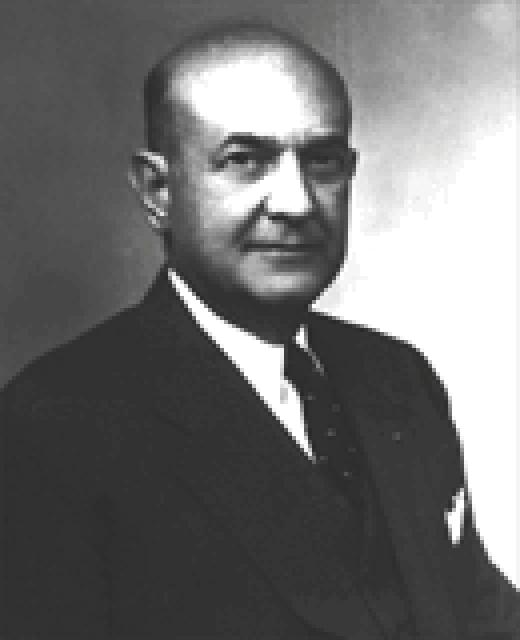
Luis Jonson
 USA
USA- Biography of Lewis Johnson
- Political Career
- Government Positions
- Secretary of Defense
- Later Life and Legacy
Biography of Lewis Johnson
Early Life and CareerLewis Johnson was an American politician and government official. He was born in Roanoke, Virginia and graduated from the University of Virginia. After completing his education, Johnson practiced law at the firm Steptoe and Johnson in Clarksburg.
Political Career
In 1916, Johnson was elected to the House of Representatives of West Virginia. During World War I, he joined the army and participated in military operations in France. Johnson was one of the founders of the American Legion, an organization for American war veterans.
Government Positions
From 1937 to 1940, Johnson served as the Deputy Secretary of War in the United States. However, in 1940, President Roosevelt dismissed him along with the Secretary of War, Harry Woodring. Johnson then managed the American assets of the German chemical giant, I.G. Farben.
In 1942, he became President Roosevelt's personal representative in India. In 1948, during President Truman's campaign, Johnson held the position of Chairman of the Finance Committee of the Democratic Party, raising funds for the elections. After Truman's victory, Johnson was appointed as the Secretary of Defense, replacing James Forrestal.
Secretary of Defense
Shortly after Johnson assumed office, 11 countries signed the North Atlantic Treaty, creating NATO. As Secretary of Defense, Johnson implemented a policy of significant budget cuts in defense spending. Surplus weapons and supplies from World War II were either destroyed or sold abroad to avoid storage costs. Military ships were scrapped for metal or put into preservation. The Navy and Marine Corps underwent significant reductions, as Johnson believed that the development of nuclear weapons and strategic aviation reduced the need for surface ships and amphibious operations. In particular, the construction of the giant aircraft carrier USS United States was halted, leading to the "Revolt of the Admirals" when the Navy's leadership opposed the disproportionate development of the US Air Force at the expense of the Navy. The new giant bomber, Convair B-36, also faced criticism. Secretary of the Navy, John Sullivan, resigned in protest against the termination of the supercarrier construction.
Later Life and Legacy
When the Korean War broke out, it was revealed that American troops faced a shortage of weapons and equipment. In September 1950, Johnson was dismissed from his position. After his resignation, Johnson continued to practice law. He passed away in 1966.