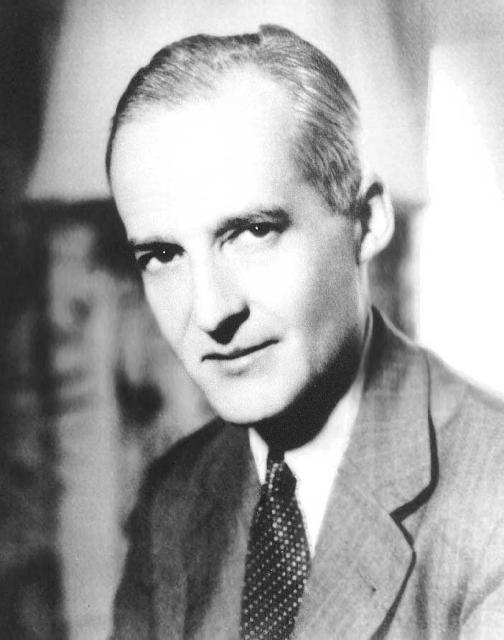
Luis Leluar
 Argentina
Biography of Luis F. Leloir
Early LifeLuis Federico Leloir, an Argentine biochemist and Nobel laureate, was born in Paris to parents Federico Leloir and Hortensia (Aguirre) Leloir. The family returned to Buenos Aires when Luis was two years old, where he attended elementary and high school. After graduating from the University of Buenos Aires in 1932 with a medical degree, Leloir began working at a university hospital. However, feeling unsatisfied with the limited medical treatment options available at the time, he switched to studying biochemistry at the University Institute of Physiology under the guidance of Bernardo Houssay.
Research and Career
Leloir's growing interest in biochemistry led him to travel to England in 1936 to work at the University of Cambridge's biochemistry laboratory, led by Frederick Gowland Hopkins. After a year of studying enzyme biochemistry, Leloir returned to the Institute of Physiology in Buenos Aires, where he focused on studying ethanol metabolism and fatty acid oxidation in non-cellular liver extracts. This research was groundbreaking at the time, as it was believed that intact cellular structures were necessary for these processes.
Leloir then joined a group of scientists studying the role of the kidney in blood pressure regulation. This work led to the discovery of angiotensin, a peptide that can be cleaved by the enzyme renin produced by the kidney, from angiotensinogen, a liver-produced protein. However, with the rise of Juan Peron's political influence in Argentina in 1943, Houssay was dismissed, and his research group was disbanded.
Leloir relocated to the United States and worked as a research assistant in the biochemistry laboratories of Carl F. Cori at Washington University in St. Louis, Missouri, and later under David E. Green at the College of Physicians and Surgeons of Columbia University in New York City. After returning to Argentina two years later, Leloir conducted research at the Institute of Biology and Experimental Medicine, a private institute led by Houssay in Buenos Aires.
With financial support from Jaime Campomar, a textile company owner, Leloir established the Institute for Biochemical Research in 1947, where he served as director. The institute's initial research focus was the synthesis of lactose, as little was known at the time about how complex organic molecules were synthesized by living systems.
Breakthrough Discovery
While searching for the enzyme responsible for the reversible synthesis of lactose, Leloir and his colleagues discovered that the process required two heat-labile coenzymes, which he identified as glucose-1,6-diphosphate and uridine diphosphate glucose. This discovery was significant, as previous compounds had been found to contain adenosine nucleotide, while the presence of uridine was a novel finding. Leloir and his team suspected that uridine diphosphate glucose had other functions beyond its role as a coenzyme in galactose metabolism. They soon found that it also served as a glucose donor in the formation of trehalose phosphate disaccharides and sucrose phosphate. Researchers in various laboratories quickly discovered numerous other sugar nucleotides and demonstrated their two primary functions: involvement in the interconversion of simple sugars and acting as donors in glucose conversion reactions leading to the synthesis of α1- and polysaccharides.
In 1959, after Leloir and his colleagues discovered that glycogen, the major carbohydrate reserve in humans and animals, was formed from uridine diphosphate glucose, they analyzed starch synthesis in plants and demonstrated that the sugar nucleotide involved in this process was adenosine diphosphate glucose.
Later Life and Legacy
When Peron's dictatorship was overthrown in 1955, Leloir's Institute for Biochemical Research was provided with more space by the new government. In 1962, the institute became a branch of the University of Buenos Aires, and Leloir was appointed as the head of the biochemistry department. However, he later stepped down from this administrative position to spend more time in the laboratory.
In 1970, Leloir was awarded the Nobel Prize in Chemistry "for his discovery of sugar nucleotides and their role in the synthesis and biosynthesis of complex carbohydrates." Following this achievement, Leloir became a national hero in Argentina, and a postage stamp with his portrait was even issued.
In his later years, Leloir continued his biochemistry research, focusing on the role of lipids as intermediate compounds in the synthesis of polysaccharides from sugar nucleotides and the involvement of dolichol (a polyisoprene substance) in the synthesis of glycoproteins, which are components of biological membranes and immunological substances in blood groups.
Leloir, described by his students and colleagues as a kind and caring individual, was known for conducting important scientific research despite limited financial resources. He married Amelia Zucherbuchler in 1943, and they had a daughter together. Leloir passed away on December 2, 1987, in Buenos Aires. He actively participated in the Argentine Society for Biochemical Research and the Pan-American Association of Biochemical Societies and received awards and honorary degrees from universities around the world. He was a member of the National Academy of Sciences, the American Academy of Arts and Sciences, the American Philosophical Society, the Pontifical Academy of Sciences, and the Royal Society.


