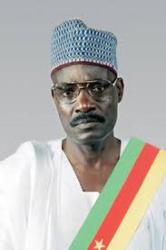
Mamoru Shigemitsu
 Japan
Japan- Biography of Mamoru Shigemitsu
- Early Career
- Role in Soviet-Japanese Relations
- Ambassador to the United Kingdom
- World War II and Aftermath
Biography of Mamoru Shigemitsu
Japanese Diplomat and Foreign MinisterMamoru Shigemitsu was a Japanese diplomat and politician who served as the country's first representative to the United Nations. He was born in Oita Prefecture and obtained a law degree from the University of Tokyo before joining the Ministry of Foreign Affairs.

Early Career
In 1919, Shigemitsu was a member of the Japanese delegation at the Paris Peace Conference and later worked at the embassy in Germany. He also served as a consul in Portland, USA for some time. During his diplomatic service in China from 1931 to 1932, he was injured in an attack by a Korean militant and lost his leg. From 1933 to 1936, Shigemitsu served as the Deputy Minister of Foreign Affairs and aligned himself with policymakers who had aggressive attitudes towards China.

Role in Soviet-Japanese Relations
In 1936, Shigemitsu was appointed as the ambassador to Moscow, where he participated in the signing of the Japanese-Soviet agreements on fishing rights. He demanded the transfer of the Zaosernaya Heights to Japan in July 1938, ignoring references to the 1886 Russo-Chinese Agreement on the Hankou region. He also played a role in the peace negotiations following the subsequent Hasan events, which lasted nearly a month and concluded on August 10th. Military actions ceased at noon the following day.
Ambassador to the United Kingdom
From 1938 to 1941, Shigemitsu served as the ambassador to the United Kingdom. However, he was recalled in June 1941 and spent two weeks in the United States for consultations with Ambassador Nomura on his way back to Japan.
World War II and Aftermath
After Japan's attack on the United States, Shigemitsu was appointed as the ambassador to the puppet Nanjing government. On April 20th, 1943, Prime Minister Tojo replaced Tuneyoshi with Shigemitsu as the Minister of Foreign Affairs. His attempts at mediating a peace treaty between Germany and the Soviet Union in 1943-1944 were met with resolute rejection from Moscow.
Following Japan's defeat on September 2nd, 1945, Shigemitsu signed the Instrument of Surrender aboard the USS Missouri on behalf of the Japanese government. He was subsequently tried as one of the major Japanese war criminals by the International Military Tribunal in Tokyo and sentenced to seven years in prison on November 12th, 1948. However, after serving 4 years and 7 months, Shigemitsu was released in November 1950.
In 1952, Shigemitsu became the chairman of the Progressive Party and later the deputy chairman of the Democratic Party. As a member of Hatoyama's cabinet, he led the Japanese side in negotiations for the restoration of diplomatic relations with the Soviet Union in London in 1955 and Moscow in July 1956. However, the negotiations did not succeed due to differences in the positions of the parties regarding the fate of the Kuril Islands.
Shigemitsu was the first representative of Japan to the United Nations, a position he held from December 18th, 1956. On December 23rd, a new cabinet was formed by the Ishibashi government, and Shigemitsu was replaced as the Minister of Foreign Affairs by Kishi. He passed away on January 26th, 1957, at the age of 69, due to a heart attack.