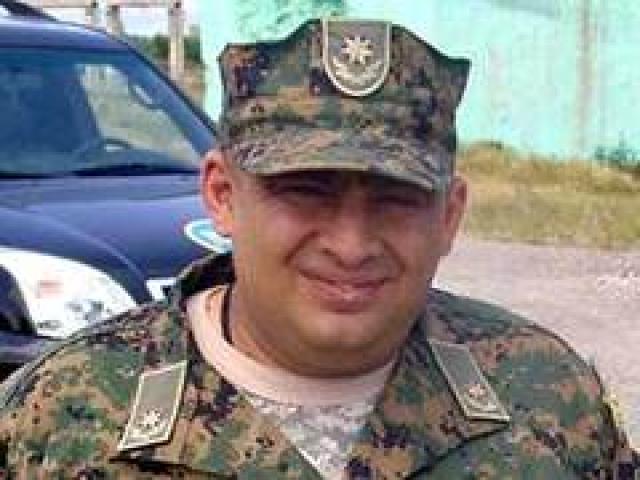
Mamuka Kurashvili
 Georgia
- Early Military Career
- Command of Georgian Peacekeeping Battalion
- 2008 South Ossetia Conflict
- Russian Response and Ceasefire
Brigadier General Mamuka Kurashvili: Peacekeeper in Georgia's Conflict Zones
Early Military Career
Mamuka Kurashvili first served as Chief of Staff for Peacekeeping Operations in Georgia, a position he later reoccupied in 2007. Between these appointments, he commanded the Georgian peacekeeping battalion within the Joint Peacekeeping Forces (JPF) in the Georgian-Ossetian conflict zone.
Command of Georgian Peacekeeping Battalion
Kurashvili's efforts as a senior military officer in the JPF's Georgian battalion aimed to foster improved relations between Georgia and Ossetians. In 2005, the South Ossetian Co-Chair of the Joint Control Commission, Boris Chochiev, praised Kurashvili's dedication as a "true peacekeeper" and a trusted authority figure. However, Kurashvili's tenure ended abruptly due to allegations by then-Minister of Defense Irakli Okruashvili.
2008 South Ossetia Conflict
Amid rising tensions in South Ossetia in 2008, Kurashvili stated that Georgian forces were not escalating the situation and were maintaining peacekeeping operations. However, on August 8, Georgia initiated a military operation to regain control of the region. Kurashvili justified the actions as necessary to remove "criminal elements."
Russian Response and Ceasefire
Following Georgia's military operation, Russian President Dmitry Medvedev condemned the attack on Russian peacekeepers and launched a counter-operation to enforce peace. Russian forces entered South Ossetia, and aerial attacks were carried out on Georgian targets.
A ceasefire was negotiated between Russia and France on August 15-16, and Russia recognized the independence of South Ossetia and Abkhazia on August 26. The de facto President of South Ossetia, Eduard Kokoity, vowed to seek international condemnation for Georgia's actions and to pursue alternative methods if the perpetrators were not held accountable.


