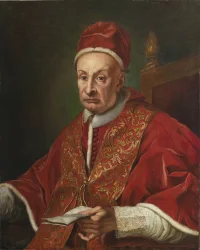
Marcellus I
- A Church Emerging from Persecution
- Dispute over the Lapsed
- Exile and Death
- A Legacy of Reconciliation and Discipline
Pope Marcellus I served the Roman Christian community during the fragile years after the persecution ordered by Emperor Diocletian. His leadership is remembered chiefly through a later inscription by Pope Damasus, which describes his effort to impose penance on Christians who had abandoned their faith under pressure. The dispute that followed reveals how difficult it was for the church to rebuild after persecution.
A Church Emerging from Persecution
Little is known about Marcellus’s early life, and even the chronology of his papacy is debated. The Roman see had been without a bishop for several years after the death of Marcellinus, during a period of persecution and political upheaval. Marcellus appears to have become bishop of Rome around 308, although some ancient lists give slightly different dates.
The crisis facing the church was not only one of buildings and leadership. During the persecution, some Christians had sacrificed to Roman gods or otherwise complied with imperial orders. Others had refused and suffered punishment. When the danger eased, the church had to decide how those who had lapsed could be readmitted to communion. The question touched personal faith, community authority, and the meaning of repentance.
Dispute over the Lapsed
A poem written for Marcellus’s tomb by Damasus I, who became pope later in the fourth century, says that Marcellus called those who had fallen away to repent. His strict approach provoked opposition from a faction associated with a figure named Heraclius. The resulting conflict apparently grew serious enough to disrupt the Roman Christian community.
Later accounts describe Marcellus reorganizing the Roman church and restoring its administration after persecution. While these stories are not all equally reliable, the Damasian inscription supports the view that questions of discipline and reconciliation became central to his short leadership. The controversy also shows that Christians did not agree on how quickly or under what conditions those who had compromised during persecution should be welcomed back.
Exile and Death
The emperor Maxentius is said to have banished Marcellus from Rome amid the unrest. The precise circumstances are uncertain, and later tradition expanded the story into a dramatic tale in which the pope was forced to tend horses at a stable before dying from hardship. Historians treat those details cautiously; the earliest evidence does not securely establish a martyr’s death.
Marcellus died around 309, probably while away from Rome. His successor, Eusebius, soon faced similar conflict over the readmission of the lapsed and was also exiled. The recurrence of the dispute suggests that the divisions outlasted Marcellus himself.
A Legacy of Reconciliation and Discipline
Marcellus’s papacy was brief, and few secure biographical details survive. Yet the conflict associated with his name captures a major challenge for early Christianity: how a community could maintain moral standards while offering a path back to those who had failed under coercion. The later church honored him as a saint, but the most enduring historical picture is of a leader trying to reunite a fractured congregation in the aftermath of persecution.