Margit Varro
- From Budapest’s music world to the concert stage
- A teaching method built around the student
- A new chapter in Chicago
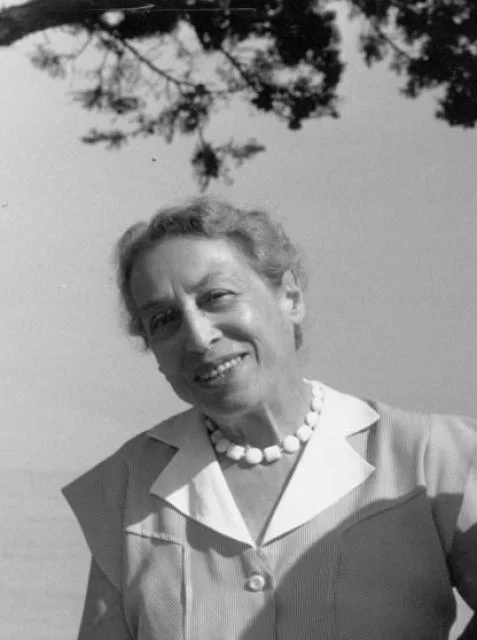
Margit Varró was a Hungarian pianist and teacher whose ideas helped reshape piano instruction around the needs of the individual student. A concert performer as well as a writer and educator, she brought musical interpretation, physical technique and psychology into one practical approach to teaching. Her work carried from Budapest to Chicago and remained influential long after she left the classroom.
From Budapest’s music world to the concert stage
Born in Barcs, Hungary, in 1881, Varró studied at the Royal Hungarian Academy of Music, where she trained as a piano teacher. She began giving private lessons and developed an active life as both performer and educator. Between 1907 and 1913, she appeared in concerts in Hungary, Austria and Germany, while also leading training courses for teachers at the State Hungarian Music Academy.
In 1918 she became the Academy’s first woman lecturer. Her responsibilities included supervising teaching demonstrations and later directing its practice school. The appointment placed her among a remarkable generation of Hungarian musicians: Béla Bartók, Zoltán Kodály, Ernő Dohnányi and Léo Weiner were part of the Academy’s wider artistic and educational circle. Varró corresponded and collaborated with Bartók and Weiner, and she wrote about music in Hungarian, German and English.
A teaching method built around the student
Varró drew her method from years of lessons and close observation. Her 1921 book, Piano Teaching and Musical Education, set out principles that she later expanded in the German-language Der lebendige Klavierunterricht: seine Methodik und Psychologie, known in English as Dynamic Piano Teaching. The book joined musicianship with technique and psychology, treating the piano lesson as a living exchange rather than a routine of drills.
She wrote about the first stages of learning, the development of musical sense, playing difficulties and stage fright. Improvisation, group lessons and children’s compositions also featured in her practical outlook. Rather than impose one fixed recipe, she urged teachers to adapt their knowledge to each pupil. That emphasis on the person behind the performance gave her work a reach beyond piano technique alone.
A new chapter in Chicago
In 1938 Varró emigrated from Hungary to the United States and settled in Chicago. She taught at the Sherwood School of Music, the Institute of Design at Illinois Institute of Technology, Roosevelt University’s Chicago Musical College and the University of Chicago, among other institutions. She also lectured on music education, history and biography, and published scholarly articles in journals including The Musical Quarterly and the Journal of the American Musicological Society.
Her students and readers knew a teacher who remained active into old age. She continued teaching into her nineties, sustaining a long connection with music and with the generations of pupils who carried her ideas forward. Varró died in Chicago in 1978. Her books, particularly the work that linked the musical, technical and psychological sides of learning, continue to be studied by piano teachers and performers.