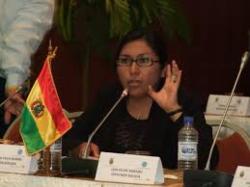
Marianela Paco
 Bolivia
- Early life and a career in communication
- From Congress to the cabinet
- Returning to journalism and public life
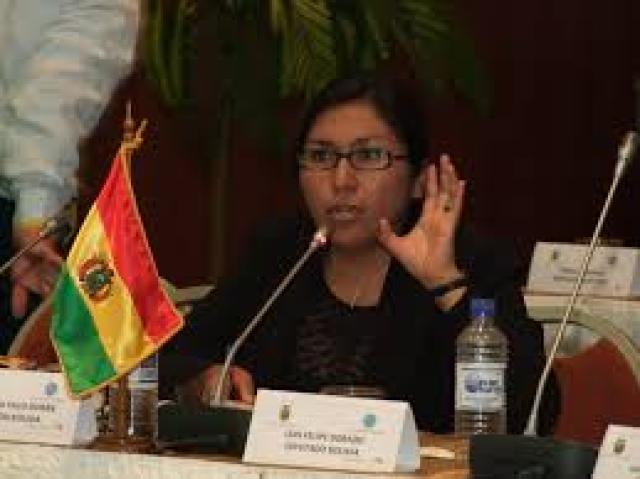
Marianela Paco built her public life at the meeting point of journalism, law and politics. A Quechua-language broadcaster before entering government, she became a legislator from Chuquisaca and later Bolivia’s Minister of Communication. Her career has brought her from local radio and community work to national debates about representation, government communications and the independence of the press.
Early life and a career in communication
Paco was born in Tupiza, in Bolivia’s Potosí Department, on 28 November 1976. She grew up across several communities in the region and later moved to Sucre to study at the University of San Francisco Xavier. There she trained in social communication and law, combining two disciplines that would shape her later work.
She began in radio, including as a Quechua-language news reader at the ACLO Foundation station in Sucre. The role placed her in a tradition of community broadcasting that served listeners often overlooked by national media. Her background as a journalist and communicator later informed her work as a political representative and minister.
From Congress to the cabinet
Paco entered national politics with the Movement for Socialism (MAS), representing Chuquisaca in the Chamber of Deputies from 2010 to 2015. She became president of the department’s parliamentary brigade, a position that gave her a visible role in regional and national affairs.
In January 2015, President Evo Morales appointed her Minister of Communication. The job made Paco one of the government’s most prominent public voices. She defended the administration’s approach to communicating state programs and argued that public information should reach people across Bolivia, including communities outside the country’s traditional media centers.
Her ministerial years were also marked by contentious debates over press freedom and government advertising. Bolivia’s National Press Association accused the government of using the withdrawal of state advertising to pressure editorially independent outlets. Paco rejected claims that the administration was economically constraining the press and defended its communications policy. In 2016, the electoral tribunal also opened a proceeding over a paid ministry supplement published during the referendum campaign, saying it appeared to breach rules on public entities’ use of pro- and anti-referendum messages. The report at the time described the matter as an ongoing process requiring her response.
Returning to journalism and public life
Paco left the ministry in January 2017 when Morales changed his cabinet. Later that year, she returned to the media sector as director of the Santa Cruz newspaper *La Estrella del Oriente*. She has continued to appear in public discussion as a lawyer and political commentator, including in debates about journalism, law and Bolivian politics.
Her path is unusual in the way it bridges several worlds: community radio, legal practice, legislative politics and the executive branch. Paco’s public image has been shaped both by her advocacy for broader representation and by the sharp disputes that surrounded her ministry. The combination reflects the role she occupied—as a communicator who became a political decision-maker, and whose words and policies were consequently examined by supporters, critics and the press alike.