Robert Golob
 Slovenia
- Engineering and early public service
- Building a career in energy
- From party newcomer to prime minister
- Challenges and public scrutiny
- The 2026 election and life after office
- Legacy
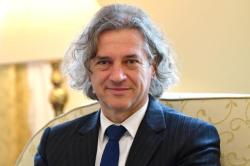
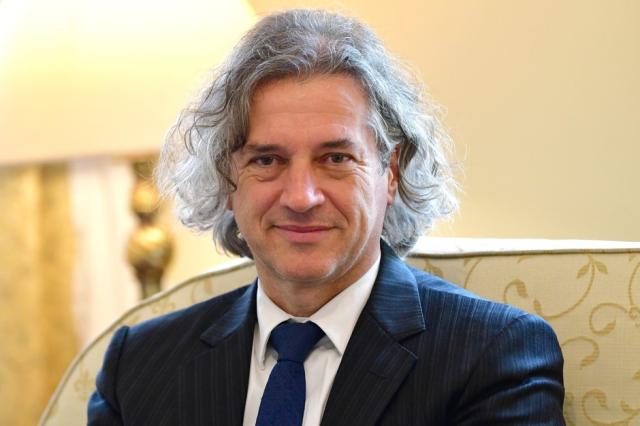
Robert Golob made an unusually rapid transition from energy executive to head of government. A power-systems engineer and university researcher, he had spent years building a profile in Slovenia’s electricity sector before entering electoral politics in 2022. His Freedom Movement won a sweeping victory, carrying him to the premiership as a liberal, green-minded alternative to the government of Janez Janša. Golob led Slovenia from June 2022 until June 2026, when he left office after a close election and an unsuccessful attempt to assemble a new governing coalition.
Engineering and early public service
Golob was born on 23 January 1967 in Šempeter pri Gorici, Slovenia. He studied electrical engineering at the University of Ljubljana, earning a bachelor’s degree in 1989, a master’s in 1992 and a doctorate in 1994. A Fulbright scholarship took him to Georgia Tech in Atlanta as a visiting researcher. His academic work focused on power systems, electricity markets and energy policy, fields that would later shape his business career and public identity.
He combined research with public service early on. From 1999 to 2002, he served as State Secretary for Energy in Slovenia’s Ministry of Economic Affairs. He later returned to university teaching, becoming an associate professor, and published research on power-system planning and optimization.
Building a career in energy
In 2002, Golob founded his first company, IBES. He went on to help develop GEN-I, an energy trading and supply company, and became its chief executive in 2006. Under his leadership, GEN-I expanded beyond Slovenia and became a significant regional electricity trader. Golob was often presented as a technically minded manager who helped make the energy market more competitive and pushed for greater use of digital systems and renewable power.
His tenure at GEN-I ended in 2021 after the company’s owners failed to agree on a new mandate for its management board. Golob argued that political influence was behind the failure to renew his leadership; the governing side disputed that characterization. The public dispute pushed him toward national politics at a moment when Slovenia was already sharply divided over Janša’s government and its pandemic-era policies.
From party newcomer to prime minister
In January 2022, Golob took over the Green Action party and renamed it the Freedom Movement (Gibanje Svoboda). He campaigned on social justice, a green transition, a stronger welfare state and what he described as a more open society governed by the rule of law. In the April election, the party won 41 of 90 seats, the strongest result of any party since Slovenia’s independence. The National Assembly elected Golob prime minister, and he took office on 1 June 2022, leading a coalition with the Social Democrats and the Left.
His government began amid overlapping challenges: recovery from the pandemic, soaring energy costs after Russia’s invasion of Ukraine and, in August 2023, catastrophic floods that damaged homes, roads and infrastructure across Slovenia. Golob’s administration organized emergency support and a large reconstruction effort. It also pursued changes in healthcare, long-term care, housing, education and energy policy. The government emphasized that it had stabilized the country and laid the groundwork for long-term reforms; independent assessments noted that several promised reforms moved slowly and that healthcare and other major changes remained contentious.
Golob became a prominent European voice on climate and energy policy. His engineering background gave him credibility in debates about electricity markets and decarbonization, while the demands of governing required him to balance long-term transition plans against immediate household costs and energy security. His administration also took positions on foreign policy that drew domestic debate, including recognition of a Palestinian state in 2024.
Challenges and public scrutiny
Golob’s time in office included a continuing dispute with former Interior Minister Tatjana Bobnar over police appointments. Bobnar accused him of exerting pressure on staffing decisions; Golob rejected the allegations. Slovenia’s Commission for the Prevention of Corruption concluded in January 2026 that two text messages Golob had sent Bobnar about the police staffing situation violated the integrity standards expected of his office. Golob disputed that finding and argued the messages did not amount to an integrity breach.
Separately, prosecutors sought a judicial investigation over the allegations of improper political intervention in police work. In September 2026, after Golob had returned to parliament as a lawmaker, the National Assembly declined to grant him immunity; he had said he would not invoke it. At that point, the court had not yet decided whether to open a formal investigation. The case remained unresolved in the public record, and the allegations had not been established as a criminal conviction.
The 2026 election and life after office
Golob’s party again finished first in the March 2026 election, but it fell short of a parliamentary majority. Negotiations with potential partners failed, and Golob said the Freedom Movement would move into opposition. On 4 June 2026, the new National Assembly approved a government led by Janša, ending Golob’s four-year premiership. Golob remained leader of the Freedom Movement and returned to parliament as an opposition lawmaker.
He married Tina Gaber in 2025. Gaber, a public figure and former model, had appeared with him at official events during his premiership, and the couple also hosted public charitable receptions. Golob has generally kept his private life in the background compared with his public work as an engineer, executive and party leader.
Legacy
Golob’s ascent altered Slovenia’s political landscape: a business leader with a technical background took over a small party, renamed it, and led it to a record election result. His government dealt with the energy crisis and devastating floods while attempting structural reforms, but it also faced criticism over the pace of change and a persistent integrity dispute. His premiership ended after a narrow electoral contest without a successor coalition, leaving him to lead the opposition and defend the record of a government that had entered office with an unusually strong mandate.