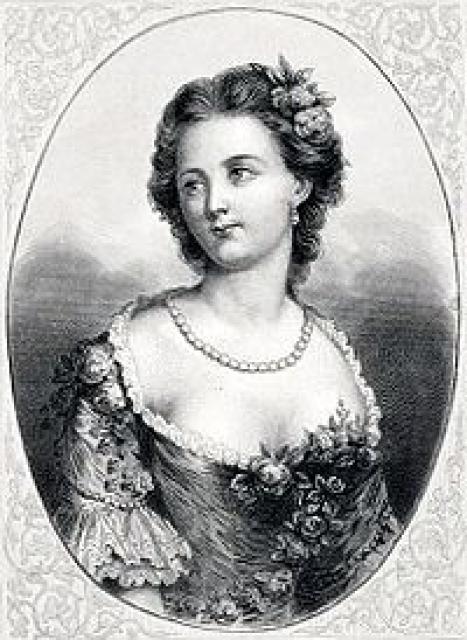
Marie-Anne Camargo
 France
- Marie-Anne de Cupis Camargo: A Revolutionary Ballerina
- Reforming Ballet
- Debut and Notable Performances
- Personal Life and Retirement
- Later Life and Legacy
Marie-Anne de Cupis Camargo: A Revolutionary Ballerina
Early Life and TrainingMarie-Anne de Cupis Camargo (1710-1771), renowned ballerina, was born into an artistic family in Brussels. Her initial dance training under the celebrated Françoise Prévost was cut short due to Camargo's rebellious nature. She subsequently studied with Michel Blondy.
Reforming Ballet
Camargo is credited with revolutionizing ballet in the 1730s. She became the first woman to perform cabrioles and entrechats on stage, techniques previously reserved for male dancers. She also shortened ballet skirts to enhance her movement.
Debut and Notable Performances
Camargo debuted at the Paris Opéra on May 5, 1726. She went on to perform in numerous ballets and theatrical productions. Her grace and virtuosity captivated audiences, including the famous writer Voltaire. Among her notable partners was Antoine Laval.
Personal Life and Retirement
In 1734, Camargo left the stage at the urging of her lover, the Comte de Clermont. However, she returned to the Grand Opéra in 1741. Her comeback was met with immense success, as her cheerful nature and extraordinary dancing abilities continued to enthrall audiences throughout Europe.
Later Life and Legacy
Camargo retired from ballet in 1751, receiving a lavish pension of 1,500 francs. She passed away in Paris on April 28, 1771, and was buried in white robes and a white coffin, as was customary for unmarried women of her time. Camargo's pioneering contributions to ballet continue to inspire dancers to this day.