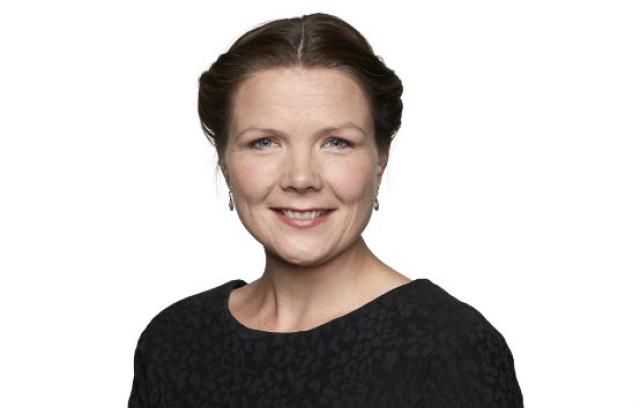
Marie Sterke
 Denmark
- Roots and Early Political Interest
- A Young Mayor in Køge
- Return to City Hall and National Party Leadership
- A New Chapter
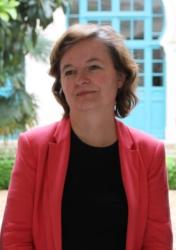
Marie Stærke is a Danish former politician whose career brought her from local youth activism to the mayor’s office in Køge and the deputy leadership of the Social Democrats. Elected mayor at only 27, she became one of Denmark’s most recognizable municipal leaders, serving two separate periods before leaving politics after the 2025 local election. In 2026 she began a new chapter as a public affairs adviser.
Roots and Early Political Interest
Marie Borghild Stærke was born in Copenhagen on August 31, 1979. She grew up in Køge and became interested in politics as a student, drawn to the way local government could shape young people’s opportunities. A year spent in Greenland in 1996, while her parents were there for work, also left a lasting impression: seeing poverty at close range sharpened her interest in social conditions and public responsibility.
Stærke became active in the Social Democratic Youth, serving as chair of its Køge branch from 1999 to 2001. She entered local politics in 2001, when she joined Køge’s municipal council. Her rapid rise reflected both her commitment to the party and her focus on practical local questions, from housing and urban development to services and community life.
A Young Mayor in Køge
In January 2007, Stærke became mayor of Køge, then the youngest mayor in Denmark. Her first term put her at the center of decisions about a municipality balancing growth, housing needs and the preservation of local identity. She advocated for neighborhoods where residents from different backgrounds could share public spaces, arguing that inclusive urban planning could help build trust and reduce social divisions.
Her first run as mayor ended after the 2013 municipal election, when the Social Democrats lost ground and a coalition of rival parties chose Conservative Flemming Christensen for the post. The change took her out of city hall but did not end her involvement in public life. She chaired the Center for Boligsocial Udvikling, an independent institute that helped municipalities and housing organizations develop knowledge about vulnerable residential areas, from 2013 to 2016. She also ran a communications consultancy.
Stærke completed a bachelor’s degree in history at the University of Copenhagen in 2016, having begun her studies while serving as mayor. Her academic work and professional experience broadened her perspective on the institutions and communities she had represented.
Return to City Hall and National Party Leadership
After the 2017 local election, Stærke returned as mayor of Køge. She won another term in 2021 and remained in office through the end of 2025. During those years, she combined municipal leadership with a growing role in national party politics. In 2020, the Social Democrats elected her one of two deputy leaders, giving her a platform beyond the municipality.
Her public work also extended into civic and institutional organizations. She served on boards and committees connected with regional development, housing and education, including Roskilde University. Across these roles, she emphasized collaboration between local government, residents and organizations as a way to make development socially sustainable.
A New Chapter
The 2025 municipal election brought another turning point. The Social Democrats lost support in Køge, and Stærke did not retain the mayoralty. She received 3,473 personal votes, while incoming mayor Ken Kristensen received 5,662. Her time in local politics ended as the new municipal council took office in January 2026.
In February 2026, Stærke also stepped down as deputy leader of the Social Democrats and announced that she was leaving politics. She joined the public affairs firm Rud Pedersen as an adviser, starting in March. The move drew on the experience she had accumulated in local government and party leadership, now applied to helping organizations understand political processes and navigate public policy.
Stærke’s career has been defined by a close connection to local communities and an unusual early ascent into leadership. From her election as Denmark’s youngest mayor to her return to Køge’s town hall and eventual move into public affairs, she has worked at the intersection of politics, social policy and urban life.