
Mario Soares
 Portugal
- Early Life and Political Activism
- Communist Roots and the Socialist Action Party
- Exile and the Foundation of the Socialist Party
- Return to Portugal and First Premiership
- Second Premiership and EU Accession
- Presidency and Legacy
Early Life and Political Activism
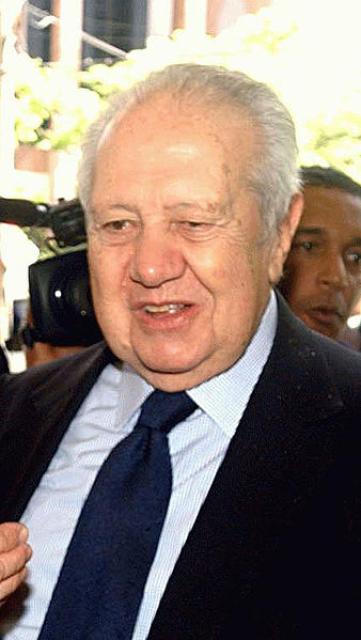
Mário Soares was born into a family of educators in Portugal. As a student, he joined the Communist Party but left in 1951. Soares actively opposed the authoritarian regime of António Salazar and was repeatedly arrested. This prevented him from pursuing his profession as a history and geography teacher, forcing him to become a lawyer instead.
Communist Roots and the Socialist Action Party
During the 1958 presidential campaign of Humberto Delgado, Soares supported the opposition. Gradually, his views shifted away from communism. In 1964, he helped establish the Socialist Action Party of Portugal in Geneva.
Exile and the Foundation of the Socialist Party
In 1968, Soares and his family were exiled to São Tomé and Príncipe. After the rise to power of Marcelo Caetano, he returned to Portugal in 1969. Forced to leave again in 1970, Soares co-founded the Socialist Party of Portugal in 1973 and became its Secretary-General.
Return to Portugal and First Premiership
Soares returned to Portugal following the Carnation Revolution in 1974. He served as Minister for Overseas Territories and negotiated Mozambique's independence. In 1976, after the Socialist Party's election victory, he became Prime Minister. His government's economic stabilization measures proved unpopular, leading to his resignation two years later.
Second Premiership and EU Accession
Soares returned as Prime Minister in 1983 after the left's victory in the parliamentary elections. He formed a coalition between the Socialists and the Social Democrats. His major achievement was successfully preparing Portugal for entry into the European Economic Community (EEC).
Presidency and Legacy
In 1986, Soares narrowly won the presidential election. He was reelected in 1991 with support from both Socialists and Social Democrats. After leaving the presidency, Soares served in the European Parliament from 1999 to 2004. He unsuccessfully ran for president again in 2006, finishing third with less than 15% of the vote.
Mário Soares's legacy remains as one of Portugal's most influential politicians. He played a pivotal role in the Carnation Revolution, the transition to democracy, and the country's European integration. His contributions to Portuguese socialism and his unwavering support for democracy continue to shape Portugal's political landscape.


