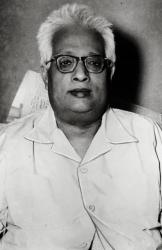
Mark Oliphant
 Australia
- Early Life and Education
- Cambridge and Tritium Discovery
- Nuclear Weapons and the Manhattan Project
- Post-War Research and Recognition
- Legacy and Honors
Early Life and Education
Mark Oliphant was born into a large family in Adelaide, Australia. Despite being nearsighted and partially deaf from a young age, he pursued his education at the University of Adelaide, initially in medicine before switching to physics. He graduated with honors in 1922.
Cambridge and Tritium Discovery
In 1927, Oliphant received a scholarship to study at the Cavendish Laboratory in Cambridge, England. He worked under Ernest Rutherford, designing particle accelerators. In 1934, he collaborated with Rutherford and Paul Harteck to discover tritium and predict the existence of helium-3 (later experimentally confirmed in 1939).
Nuclear Weapons and the Manhattan Project
In 1937, Oliphant began working at the University of Birmingham, where he contributed to the development of a cyclotron and a centimeter-range radar system. In 1940, he joined the Maud Committee, a group of physicists overseeing British nuclear research. He played a pivotal role in convincing the United States to join the effort, which led to the establishment of the Manhattan Project in December 1941.
Post-War Research and Recognition
Oliphant returned to the University of Birmingham after the war, where he became an outspoken opponent of nuclear weapons following the Hiroshima bombing. He returned to Australia in 1950 and served as the first director of the Australian National Laboratory. He designed and built a colossal unipolar generator and experimental railgun.
Legacy and Honors
Oliphant was instrumental in establishing the Australian Academy of Sciences, serving as its first president from 1954 to 1957. He entered politics in 1967 and served as Governor of South Australia from 1971 to 1976. Oliphant received numerous awards and honors throughout his career, including the Hughes Medal (1943), Faraday Medal (1948), Knight-Commander of the Order of the British Empire (1959), and the Order of Australia (1977).