Marry Gell-Mann
 USA
USA- Early Life and Education
- Research at the University of Chicago
- The Concept of Strangeness
- The Eightfold Way
- Quarks
- Nobel Prize and Later Life
Early Life and Education
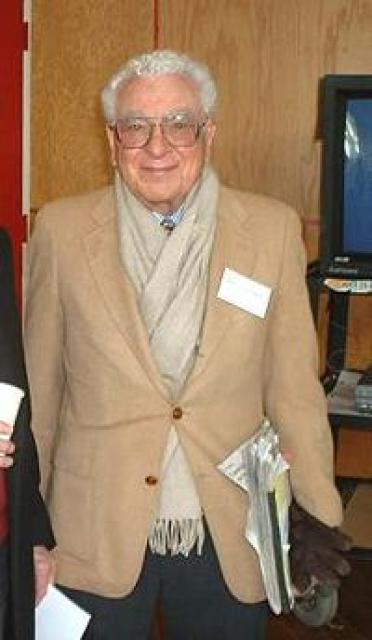
Murray Gell-Mann was an American physicist who was born in New York City to Austrian immigrants Arthur and Pauline (Reichstein) Gell-Mann. At the age of fifteen, Gell-Mann entered Yale University, from which he graduated in 1948 with a Bachelor of Science degree. He subsequently attended the Massachusetts Institute of Technology, where he received a doctorate in physics in 1951.
Research at the University of Chicago
After a year at the Institute for Advanced Study in Princeton, New Jersey, Gell-Mann joined the faculty of the University of Chicago with Enrico Fermi, initially as an instructor (1952-1953), then as an assistant professor (1953-1954), and associate professor (1954-1955). In the 1950s, elementary particle physics (Gell-Mann's primary area of interest) was in a formative stage. The main experimental tool in this field was accelerators that fired a beam of particles into a stationary target, producing new particles in the collision between the incoming particles and the target. Experimenters were able to create a number of new types of elementary particles in addition to the already-known protons, neutrons, and electrons. Theoretical physicists sought to find some scheme that would classify all the new particles.
The Concept of Strangeness
Among the particles discovered were some with unusual ("strange") behavior. The rate at which such particles were produced in certain collisions suggested that their behavior was governed by the strong interaction, which is characterized by rapid action. The strong, weak, electromagnetic, and gravitational interactions comprise the four fundamental interactions that underlie all phenomena. However, the strange particles decayed unusually slowly, which would not be possible if their behavior were determined by the strong interaction. The decay rate of strange particles, it seemed, indicated that this process was governed by the much weaker weak interaction. It was to the solution of this puzzling problem that Gell-Mann directed his attention.
As a starting point for his construction, Gell-Mann used the notion known as charge independence. This concept involves grouping particles in a certain way that emphasizes their similarities. For instance, although the proton and the neutron differ in electric charge (the proton has a charge of +1, the neutron 0), in every other respect they are identical. Hence, they can be regarded as two varieties of the same type of particle, called the nucleon, which has an average charge, or charge center, of 1/2. The proton and the neutron are said to form a doublet. Other particles can likewise be arranged into similar doublets or into groups of three particles, called triplets, or into "groups" consisting of just one particle, called singlets. The collective name for a group consisting of any number of particles is a multiplet.
Efforts to group strange particles in an analogous manner had proved unsuccessful. In developing his scheme for their grouping, Gell-Mann found that the average charge of their multiplets differed from 1/2 (the average charge of nucleons). He came to the conclusion that this divergence might be a fundamental property of strange particles and proposed the introduction of a new quantum property called strangeness. For reasons of algebraic consistency, the strangeness of a particle was defined as twice the difference between the average charge of the multiplet and the average charge of the nucleons (1/2).
Gell-Mann showed that strangeness is conserved in all reactions involving the strong interaction. In other words, the total strangeness of all the particles before the strong interaction must be exactly equal to the total strangeness of all the particles after the interaction. The conservation of strangeness explains why the decay of such particles cannot be governed by the strong interaction. In the collisions of certain other, nonstrange particles, strange particles are created in pairs. In this process, the strangeness of one particle compensates for the strangeness of the other. For example, if one particle in the pair has a strangeness of +1, the other has a strangeness of -1. It is for this reason that the total strangeness of the nonstrange particles is zero before and after the collision. After their production, the strange particles fly apart. An isolated strange particle cannot decay by the strong interaction if its decay products are to be particles with zero strangeness, since such a decay would violate the conservation of strangeness. Gell-Mann showed that the electromagnetic interaction (whose characteristic time of action lies between the times of the strong and weak interactions) also conserves strangeness. Thus, once produced, strange particles survive until they decay by the weak interaction, which does not conserve strangeness. Gell-Mann published his ideas in 1953.
The Eightfold Way
In 1955 Gell-Mann became an associate professor at the California Institute of Technology; the next year he was named full professor, and in 1967 he became the Robert Andrews Millikan Distinguished Professor of Theoretical Physics. In 1961 Gell-Mann discovered that the system of multiplets he had proposed to describe strange particles could be incorporated into a much more general theoretical scheme that enabled him to group all strongly interacting particles into "families." Gell-Mann called this scheme the eightfold way (by analogy with the eightfold path of Buddhism), since some of the particles were grouped into families containing eight members. The particle classification scheme he proposed is also known as SU(3) symmetry. A similar classification of particles was proposed independently by the Israeli physicist Yuval Neeman.
Gell-Mann's eightfold way has often been compared to Dmitri Mendeleev's periodic table of chemical elements, in which chemical elements with similar properties are grouped into families. Like Mendeleev, who left blank spaces in the table, predicting the properties of yet-to-be-discovered elements, Gell-Mann left vacant places in some of his families of particles, suggesting what particles with the proper set of properties should fill the "gaps." Gell-Mann's theory received partial confirmation in 1964 with the discovery of the so-called omega-minus particle, whose existence he had predicted.
Quarks
In 1963, while a visiting professor at the Massachusetts Institute of Technology, Gell-Mann discovered that the detailed structure of the eightfold way could be explained by assuming that each strongly interacting particle is composed of a triplet of particles with charges that are fractional parts of the electric charge of a proton. A similar idea was independently developed by the American physicist George Zweig, who was working at the European Centre for Nuclear Research. Gell-Mann called the particles with fractional charges quarks, borrowing the term from James Joyce's novel Finnegans Wake ("Three quarks for Muster Mark!"). Quarks can have charges of +2/3 or -1/3. Antiquarks, which have charges of -2/3 or +1/3, also exist. The neutron, which has no electric charge, is composed of one quark with a charge of +2/3 and two quarks with charges of -1/3. The proton, which has a charge of +1, is composed of two quarks with charges of +2/3 and one quark with a charge of -1/3. Quarks with the same charge can differ in other properties, so that there are several types of quarks with the same charge. Different combinations of quarks make it possible to account for all strongly interacting particles.
Nobel Prize and Later Life
In 1969 Gell-Mann was awarded the Nobel Prize in Physics "for his contributions and discoveries concerning the classification of elementary particles and their interactions." In presenting the award, Ivar Waller of the Royal Swedish Academy of Sciences said that Gell-Mann had been "for more than a decade a leading scientist in the field of elementary particle theory." Waller said that the methods developed by Gell-Mann "belong to the most powerful tools for the further investigation of elementary particle physics."
Among Gell-Mann's other contributions to theoretical physics are his proposal, with Richard P. Feynman, of the concept of "currents" of weak interactions and his subsequent development of "current algebra." In 1955 Gell-Mann married J. Margaret Dow, an archaeologist. They had a son and a daughter. His wife died in 1981. Gell-Mann enjoys bird-watching, hiking, and travel to unspoiled environments. In 1969 he helped to organize an environmental study program sponsored by the U.S. National Academy of Sciences. He is also an avid student of historical linguistics.
Gell-Mann has received the American Physical Society's Dannie Heineman Prize for Mathematical Physics (1959), the U.S. Atomic Energy Commission's Ernest Orlando Lawrence Award (1966), the Franklin Institute's Franklin Medal (1967), and the U.S. National Academy of Sciences' John J. Carty Medal (1968). He is a fellow of the American Academy of Arts and Sciences and a foreign member of the Royal Society of London. In 1959 he was awarded an honorary degree by Yale University.