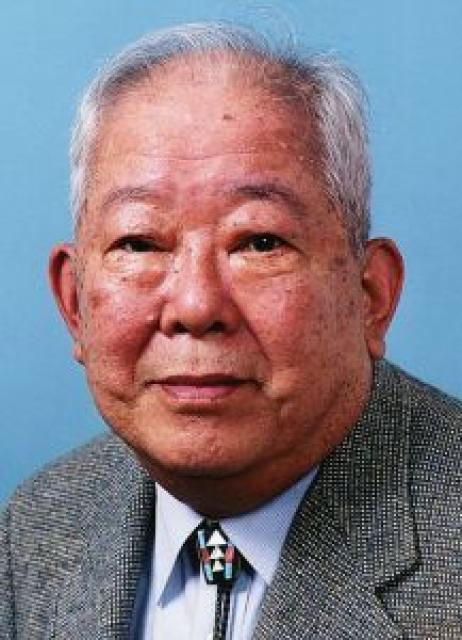
Masatosi Kosiba
 Japan
Japan- Biography of Masatoshi Koshiba
- Education and Early Career
- Research and Contributions
- Nobel Prize and Later Life
Biography of Masatoshi Koshiba
Masatoshi Koshiba was a Japanese physicist and Nobel laureate in Physics. He was born on September 19, 1926, in Toyohashi, Japan.
Education and Early Career
Koshiba studied at the University of Tokyo, where he completed his undergraduate degree. After graduating in 1951, he pursued his doctoral studies and transferred to the University of Rochester in the United States in 1953. In 1955, Koshiba obtained his Ph.D. for his work on ultra-high-energy phenomena in cosmic rays.
Research and Contributions
During the 1950s and 1960s, Koshiba focused on studying high-energy cosmic radiation and related phenomena in the upper atmosphere. These investigations led him to the field of muon and neutrino physics, as well as elementary particle physics in the 1970s.
Koshiba participated in the JADE project, a collaborative effort between Germany and Japan, at the DESY accelerator in Hamburg. He then constructed a detector called Kamiokande to observe the predicted proton decay. Although the proton decay was not observed, Koshiba converted the detector into a neutrino detector and successfully registered cosmic neutrinos. In 1987, during the supernova explosion 1987A, he managed to detect 12 neutrinos, with 9 of them detected within the first 2 seconds. This groundbreaking experiment provided the first direct experimental evidence of the theories on stellar collapse, particularly neutrino cooling.
Nobel Prize and Later Life
In recognition of his significant contributions to the field of astrophysics and neutrino astronomy, Masatoshi Koshiba was awarded the Nobel Prize in Physics in 2002. He shared half of the prize with Raymond Davis Jr., "for the discovery of neutrino oscillations, which shows that neutrinos have mass."
Throughout his career, Koshiba received numerous awards and honors, including the Federal Cross of Merit in Germany in 1985, the Nishina Memorial Prize in 1987, and the Asahi Prize in 1988 and 1999. He was also a member of the Japanese Academy of Sciences.
Masatoshi Koshiba passed away on November 12, 2020, leaving behind a remarkable legacy in the field of physics and his contributions to our understanding of neutrinos and astrophysical phenomena.