Mihai Antonescu
 Romania
- Early Life and Education
- Political Career
- Wartime Role
- Attempted Withdrawal from the War
- Trial and Execution
Early Life and Education
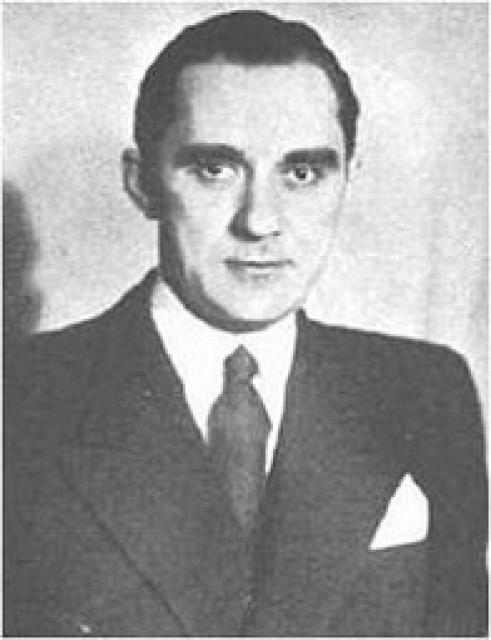
Mihai Antonescu was born on November 18, 1904, in the village of Nucşet in Dâmbovița County, Romania. He attended high school in Pitești and later the National College in Bucharest. From 1922 to 1926, Antonescu studied law at the University of Bucharest and became a lawyer after graduating.
Political Career
Initially, Михай Antonescu was not a supporter of the extremist fascist party known as the "Iron Guard." In 1930, he joined the National Liberal Party of Romania. However, his political views gradually shifted to the right and he eventually joined the Iron Guard, becoming a close confidant of its leader, Ion Antonescu. Mihai's influence grew as another top figure in the party, Horia Sima, lost his. Sima was forced to leave Romania, leaving Mihai Antonescu as the second-in-command of the Iron Guard.
Wartime Role
After the suppression of the Legionary Rebellion in January 1941, Mihai Antonescu became Deputy Prime Minister and Minister of Foreign Affairs. On June 22, 1941, at 10 AM, Mihai Antonescu declared Romania's war against the Soviet Union in a speech in Bucharest. In this speech, he glorified the Romanian people as a great nation cooperating with Hitler, while referring to Slavs and Jews as degraded and backward races.
With Ion Antonescu heavily focused on Romania's military operations during the war, Mihai Antonescu assumed virtual leadership of the country's internal affairs. He strengthened Romania's ties with Nazi Germany and was directly responsible for the persecution of Jews in Romania. He stripped them of their rights and property, sanctioned pogroms (such as the one in Iași in 1941), prohibited their emigration, and stripped of citizenship those abroad. Mihai Antonescu is held responsible for mass killings of Jews in Bessarabia and Bukovina and the deportation of survivors to concentration camps in present-day Transnistria.
Attempted Withdrawal from the War
From late 1942 onwards, as the situation on the Soviet-German front worsened, Antonescu became concerned and sought ways to withdraw Romania from the war. Mihai Antonescu tried to convince Hitler to make peace on the Western Front and focus all his forces on the Soviet Union. After the defeat at the Battle of Stalingrad, in which Romanian units were also heavily damaged, both Antonescus began destroying documents that could incriminate them for war crimes. Mihai Antonescu secretly planned to propose a separate peace to Hungary, Italy, and Finland to fight against the USSR, but the indecisiveness of Benito Mussolini made this impossible. Despite his efforts, he managed to improve Romania's relations with the US and UK, stopping the deportation of Jews to concentration camps, allowing their emigration, and rehabilitating those still alive, although many have noted his reluctance in doing so.
Trial and Execution
On August 23, 1944, as Soviet troops approached Romania's borders, King Michael I dismissed and arrested the entire government of Ion Antonescu, including Mihai Antonescu, and declared the country's surrender. After the establishment of a communist regime in Romania, several former members of the Romanian government, including both Antonescus, were put on trial. Four of the defendants, Ion and Mihai Antonescu, Constantin Vasiliu, and Gheorghe Alexianu, were found guilty of war crimes against the Romanian people and sentenced to death by firing squad. On June 1, 1946, all four were executed near the town of Jilava.