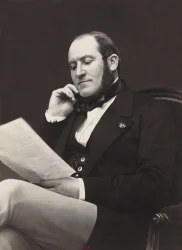
Mikhail Ivanovich Kalinin
Mikhail Ivanovich Kalinin (1875–1946) was a Bolshevik revolutionary and Soviet politician who served as the country’s formal head of state for nearly three decades. A peasant-born worker from the Tver region, he joined the revolutionary movement before 1900 and became a senior party figure after the Bolshevik Revolution. Although his titles placed him at the summit of Soviet government, real policymaking power increasingly rested with the Communist Party leadership, especially under Joseph Stalin.
Early Life and Revolutionary Work
Kalinin was born on November 7, 1875, in Verkhnyaya Troitsa, in the Tver region of the Russian Empire. He came from a peasant family and moved to St. Petersburg as a young man, where he worked in factories. In 1898 he joined the Russian Social Democratic Labour Party and became an early supporter of the Bolshevik faction led by Vladimir Lenin.
His activism brought repeated arrests, exile and surveillance. Kalinin continued organizing among workers and peasants and took part in revolutionary politics through the upheavals of 1905 and 1917. After the Bolsheviks seized power in October 1917, he became a prominent figure in the new government and party.
Head of State
In 1919, following the death of Yakov Sverdlov, Kalinin became chairman of the All-Russian Central Executive Committee, making him the formal head of state of Soviet Russia. When the Soviet Union was founded in 1922, he led its Central Executive Committee. In 1938, he became chairman of the Presidium of the Supreme Soviet, a position he held until 1946.
Kalinin was a member of the Communist Party’s leading bodies and an ally of Stalin during the internal struggles that followed Lenin’s death. His offices involved public representation, state ceremonies and the signing or promulgation of official acts. Yet the Soviet system concentrated decisive authority in the party leadership, and Kalinin did not exercise the independent power suggested by the state presidency’s formal rank.
Public Image and Final Years
The regime cultivated Kalinin’s image as a leader with humble origins and a close connection to ordinary citizens. He was often presented as an approachable figure and became known informally as the “All-Union headman.” At the same time, he served within a government responsible for extensive repression and political control, and his long tenure made him a visible participant in the Soviet state under Stalin.
Kalinin resigned from the chairmanship in March 1946 because of ill health and died in Moscow on June 3 of that year. He was buried in the Kremlin Wall Necropolis.
Legacy
Kalinin’s career spanned the creation and consolidation of the Soviet state. He held its highest formal office across the eras of Lenin and Stalin, but his political importance lay more in his longevity, party standing and public role than in independent executive authority. His name was later given to cities and institutions, reflecting his prominence in official Soviet memory.