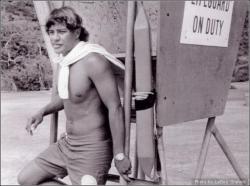
Miki Dora
 USA
USABiography of Miki Dora
Early Life and Introduction to SurfingMiklos Sandor Dora, also known as Miki Dora or the Black Knight, was born on August 11, 1934, in Budapest, Hungary. His father introduced him to the sport of surfing at a young age, and Miki quickly displayed impressive abilities. At the age of 4, he stood on a surfboard for the first time and quickly adapted to the water. By 1940, at the age of 6, Miki, accompanied by his father, visited the San Onofre beach for the first time.

Rise to Fame
Although Miki's father was not an exceptional surfer, their visits to various beaches did not deter his passion for the sport. Many believed that Miki's stepfather, Gard Chapin, played a significant role in his surfing talent. Despite not appearing to be a typical athlete, Miki became one of the most vibrant surfers at Malibu Beach during the 1950s and 1960s. His unique style and overall charm made him an icon in the surfing community.

On-Screen Presence and Legal Troubles
In addition to his surfing accomplishments, Miki appeared in several beach and surf-themed films, including "The Endless Summer," "Beach Party," "Surf Party," "Muscle Beach Party," "Bikini Beach," "Beach Blanket Bingo," "Ski Party," and "How to Stuff a Wild Bikini."
In 1970, at the height of his popularity, Miki decided to leave the United States. The decision was partly influenced by an arrest warrant issued against him, as he was linked to check and credit card fraud. Miki spent some time traveling the world, actively pursuing his passion for surfing. He returned to California in 1973, where he faced trial and received a suspended sentence. However, Miki failed to comply with the terms of his probation and ended up serving two prison sentences.
Final Years and Legacy
During the later years of his life, Miki resided primarily in France. He appeared in the documentary film "Surfers: The Movie" and became the main subject of the film "In Search of da Cat." Known by his nickname "Da Cat," Miki was arguably the best surfer at Malibu during the 1950s and 1960s. While he appeared unconventional and unpredictable on land, Miki consistently displayed high-level performances in the water. He was a leader among all California surfers at the time when the sport was being commercialized and domesticated. Miki's aggressive and non-conformist attitude contradicted the image that was being cultivated for surfers. Despite his disregard for traditional competitions and press interactions, his elegance and talent earned him respect within the surfing community.
Miki paid a high price for his life philosophy. Rumors circulated about his misadventures, and his time in prison did not benefit him. Ultimately, in 1974, Miki decided to retire from professional surfing. He claimed that he simply wanted to be alone and eventually lost interest in life itself. Miki Dora passed away on January 3, 2002, at the age of 67. He died in his father's home in Montecito, California, after a six-month battle with pancreatic cancer. Despite his controversial and rebellious nature, Miki Dora remains a legendary figure in the world of surfing.