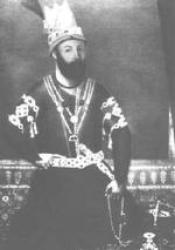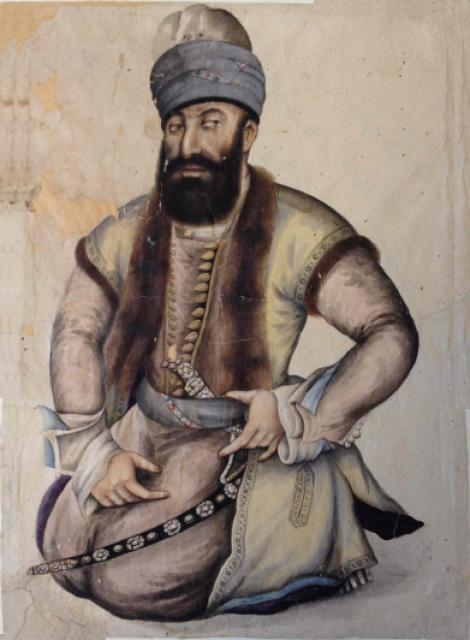
Mohammad Karim Khan Zand
 Iran
Iran- Karim Khan Zand: The People's Regent
- Reign as Regent
- Unification of Iran
- Legacy and Character
- Death and Legacy
Karim Khan Zand: The People's Regent
Early Life and Rise to PowerBorn into a Lur family around 1705, Karim Khan Zand served as a general under Nader Shah. After Nader's death in 1747, he formed an alliance with Abolfath Khan and Ali Mardan Khan to divide Iran and enthrone Safawid Ismāʿīl III. However, when Ali Mardan Khan violated the agreement, Karim Khan eliminated him and took control of most of Iran, except for Khorasan.
Reign as Regent
Instead of assuming the title of Shah, Karim Khan preferred the humble title of Vakil-o-Dowleh ("Regent of the State"). Despite holding supreme power, he insisted that he was "not a king, merely a man who loves the people." He kept Ismāʿīl III in honorary captivity while ruling in his name.
Unification of Iran
In 1763, Karim Khan captured southern Azerbaijan, completing the unification of Iran. He made Shiraz his capital and embarked on an ambitious rebuilding campaign. He constructed lavish mausoleums over the tombs of the great Persian poets Sa'di and Hafez, despite being illiterate himself.
Legacy and Character
Karim Khan's reign is considered one of the most prosperous in Iranian history. He fostered the arts and sciences, patronizing poets and scholars. Known for his humanity and generosity, his only notable flaw was his indulgence in wine. He maintained amicable relations with the British Empire, allowing the British East India Company to establish a trading post in southern Iran.
Death and Legacy
Karim Khan Zand died on March 13, 1779, triggering immediate succession conflicts among his relatives. He was buried in a small pavilion near the Arg Citadel in Shiraz, which now houses the Pars Museum. Despite his refusal of the royal title, Karim Khan is remembered as a beloved and effective leader who left a lasting mark on Iranian history.