Moktar Ould Daddah
- From Boutilimit to public life
- Independence and the new republic
- Western Sahara and the end of his rule
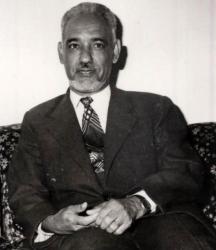
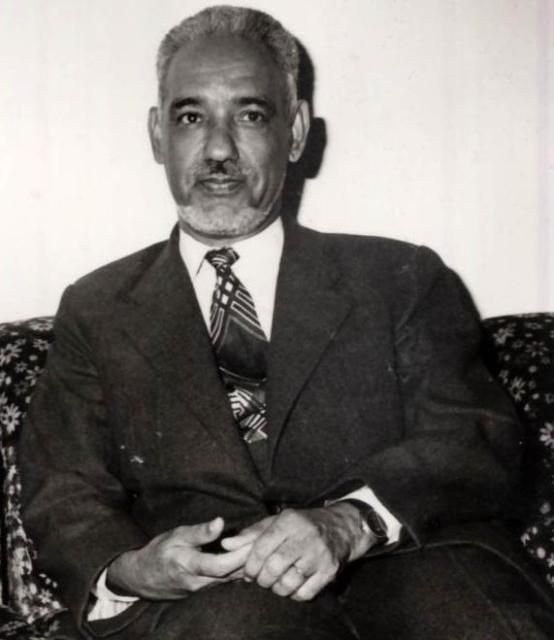
Moktar Ould Daddah was the central political figure in Mauritania’s passage from French rule to independence. A lawyer educated in France, he became the country’s first prime minister and then its first president. He helped shape a new state across a vast, sparsely populated territory, presenting Mauritania as a bridge between North Africa and sub-Saharan Africa. His long rule also became increasingly centralized, and the war over Western Sahara contributed to the crisis that ended his presidency.
From Boutilimit to public life
Born on 25 December 1924 in Boutilimit, in southern Mauritania, Ould Daddah came from a prominent religious family. He received traditional Islamic instruction alongside French-language schooling, then continued his education in Senegal and Paris. He studied law and became the first Mauritanian to earn a university degree. Before entering politics, he worked as an interpreter in the French colonial administration and was admitted to the bar in Dakar.
As France reorganized its West African territories in the 1950s, Ould Daddah emerged as a leader in Mauritania’s political institutions. He was elected to the territorial assembly in 1957 and became head of the local government the following year. He founded the Mauritanian Regrouping Party, which brought together several political currents around the goal of building a unified state. In 1959 he became prime minister.
Independence and the new republic
Mauritania became independent on 28 November 1960. Ould Daddah, already leading the government, became the new republic’s first president and was formally elected in 1961. The task before his government was formidable: the country had limited infrastructure, a widely dispersed population and competing regional and ethnic identities. He promoted national unity and sought to position Mauritania between the Arab world and Africa south of the Sahara.
His government adopted a policy it called “Islamic socialism,” combining a strong role for the state with Islamic and nationalist language. Mauritania nationalized the major iron-ore company in 1974, an important assertion of economic sovereignty. Yet political life narrowed under Ould Daddah. His party absorbed rivals, opposition was restricted, and Mauritania became a one-party state. The effort to consolidate national identity took place amid persistent social and ethnic tensions, making his record more complicated than the language of unity alone suggests.
Western Sahara and the end of his rule
The decisive crisis came after Spain prepared to withdraw from Western Sahara. In 1975, Mauritania joined Morocco in claiming and dividing the territory, entering a war against the Polisario Front, which sought independence for Western Sahara. The conflict placed heavy demands on Mauritania’s limited resources and intensified economic and political strains at home.
On 10 July 1978, while the country was still at war, Mauritanian officers overthrew Ould Daddah in a military coup. He was detained, then allowed to go into exile in France in 1979. From abroad, he remained active in opposition politics for a time, founding the Alliance for a Democratic Mauritania. He was permitted to return to his homeland in 2001, after more than two decades away.
Ould Daddah died in Paris on 14 October 2003. His legacy rests on two intertwined chapters: he helped bring Mauritania into existence as an independent republic and established its early institutions, but his increasingly authoritarian system and the decision to enter the Western Sahara conflict helped make his government vulnerable. His life reflects both the ambitions and the dangers faced by a new state trying to define itself in a changing region.