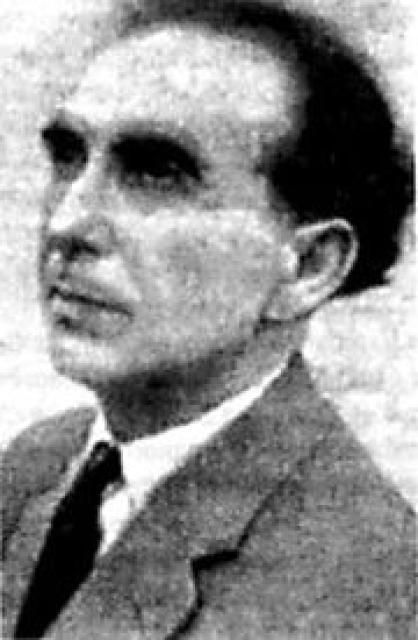
Motl-Garsh Saktsier
 Israel
- Childhood and Education
- Literary Debut and Early Career
- Collaboration with "Yung-Rumanye" Group
- Imprisonment and Labor
- Work in Theater and Cinema
- Arrest and Labor Camps
- Rehabilitation and Late Career
- Emigration to Israel
- Legacy
Childhood and Education
Motl Saktsier was born in 1896 in the town of Leovo, Bessarabia (present-day Moldova). He grew up in a family of tailors and received an education in both secular and religious schools.
Literary Debut and Early Career
In the 1920s, Saktsier moved to Bucharest, Romania, where he worked as a laborer and began publishing poetry in Yiddish magazines. His early work received critical acclaim from renowned Yiddish writer E. Steinbarg.
Collaboration with "Yung-Rumanye" Group
In 1931, Saktsier returned to Bucharest and became an active member of the "Yung-Rumanye" (Young Romania) group, a literary collective that brought together Bessarabian Jewish writers. He contributed to their journal, "Shoybm" (Windows).
Imprisonment and Labor
In 1934, Saktsier was arrested and imprisoned for his political writings. He was released in 1937, but his work was subjected to censorship.
Work in Theater and Cinema
After his release, Saktsier played a key role in the establishment of the Moldavian State Jewish Theater. He served as its literary director and wrote several successful plays, including "Royte Pomerantzn" (Red Oranges), which premiered in 1941. After World War II, he continued his theatrical endeavors in Uzbekistan and elsewhere.
Arrest and Labor Camps
In 1949, Saktsier was rearrested and sentenced to ten years in labor camps. He was sent to Siberia, where he wrote a novel, "Yidishe Shnayders" (Jewish Tailors), which was later confiscated and destroyed.
Rehabilitation and Late Career
After his release in 1954, Saktsier returned to Kishinev, where he worked as a director for various theater troupes. He continued to write and publish Yiddish poetry, which was translated into Russian and other languages.
Emigration to Israel
In 1972, Saktsier received permission to emigrate to Israel. He settled in Jerusalem and became involved in the literary community, contributing to journals such as "Di Golden Keyt" (The Golden Chain). His later poetry collections include "Mit Farbotenem Blayer" (With Forbidden Pencil) and "Toybm Af Antene" (Pigeons on the Antenna).
Legacy
Motl Saktsier died in 1986. He is remembered as a prominent Yiddish poet and playwright whose work reflects the complexities of Jewish life in Bessarabia and beyond. His writings have been translated into several languages and continue to be studied by scholars and enjoyed by readers around the world.


