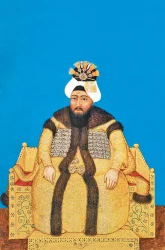
Mustafa IV
Mustafa IV’s brief reign unfolded during a struggle over whether the Ottoman Empire would continue the military reforms begun by his cousin, Selim III. He came to the throne through a revolt against those reforms and lost it when reformist forces returned to Istanbul.
A throne seized in revolt
Born in Constantinople on September 8, 1779, Mustafa was the son of Sultan Abdülhamid I. He became sultan on May 29, 1807, after a rebellion led by Kabakçı Mustafa forced Selim III to abdicate. The uprising was fueled by opposition among janissaries and religious authorities to Selim’s Nizam-ı Cedid, or “New Order,” a program intended to modernize the army and strengthen the state.
Mustafa’s accession ended Selim’s reforms. The new sultan relied on groups that had helped depose his cousin, and many of Selim’s military innovations were dismantled. But the revolt did not resolve the deeper problems facing the empire, including war with Russia and growing tensions between the central government and provincial power brokers.
The return of the reformers
In 1808, Alemdar Mustafa Pasha, a provincial governor and supporter of Selim, marched on Istanbul with the aim of restoring the former sultan. As his forces entered the capital, Mustafa ordered Selim killed in confinement. His half-brother Mahmud survived the palace violence and was proclaimed sultan on July 28, 1808.
Mustafa was deposed and imprisoned. In November, amid another uprising that brought the reformer Alemdar Mustafa Pasha to his death, Mustafa IV was executed on Mahmud II’s orders. He was twenty-nine.
Legacy
Mustafa’s reign lasted barely fourteen months and left him remembered chiefly as the sultan who replaced Selim III and then tried to block his restoration. His fate reflected the instability of an empire divided over reform and the risks of dynastic politics: a former ruler was both a potential rival and a symbol around which opposition could gather.