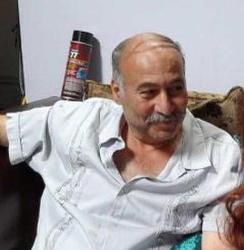
Nakoula Basseley Nakoula
 Egypt
- Early Life and Move to California
- A Prior Federal Conviction
- The Film and Public Controversy
- Public Image and Legacy
Nakoula Basseley Nakoula became an internationally known figure through a short, low-budget film whose release set off a storm of public debate. A Coptic Christian Egyptian-American who had lived a largely private life in Southern California, he was identified as a central figure behind Innocence of Muslims, a film that drew condemnation for its portrayal of Islam and the Prophet Muhammad. The controversy turned attention toward the production, the identities behind it, and the filmmaker’s own past.
Early Life and Move to California
Nakoula was born in Egypt in 1957 and later settled in California. He identified himself as a Coptic Christian, part of Egypt’s historic Christian community. Before his name became a headline around the world, he lived in the Los Angeles area and had worked in business, including gas stations. Public accounts of his early life remain limited, and he became known to a much wider audience only after the film controversy in 2012.
A Prior Federal Conviction
Years before the film drew attention, Nakoula was prosecuted in California for bank fraud. In 2010, he pleaded no contest to federal charges involving a scheme that used stolen identities and false bank accounts. He received a 21-month prison sentence, was ordered to pay restitution of more than $790,000, and was placed under supervised release. The conditions included restrictions on computer and internet use without permission.
In 2002, he had legally changed his name to Mark Basseley Youssef. Authorities and news organizations later reported that he had used multiple names, a detail that became central to the public account of the film and to later proceedings over his supervised release.
The Film and Public Controversy
In 2012, excerpts from Innocence of Muslims appeared online. The film portrayed the Prophet Muhammad in an insulting and inflammatory way, and the trailer prompted intense protests and international debate. Nakoula acknowledged to the Associated Press that he had managed the company behind the production and handled logistics, but denied that he directed the film. Reporting on the production described a series of aliases and conflicting claims about the people involved.
A federal appeals court later identified Mark Basseley Youssef, also known as Nakoula and as Sam Bacile, as the film’s writer and producer. The court record described how actress Cindy Lee Garcia had been cast in a project presented as an adventure film called Desert Warrior. Her brief performance was later reworked and dubbed into Innocence of Muslims, prompting threats against her and a legal dispute over her appearance. The episode highlighted how the production’s cast had been misled about the film they were making and how its edited version spread online.
Nakoula’s role in the film brought him both threats and scrutiny. The film’s inflammatory content was separate from the legal grounds for his later sentence: in November 2012, he admitted violating the terms of his supervised release, including by lying to his probation officer and using false identities. A judge sentenced him to another year in prison followed by four years of supervised release. The court proceeding concerned those violations of his earlier fraud case, not a prosecution for making a controversial film.
Public Image and Legacy
The name Nakoula Basseley Nakoula remains linked to one of the most contentious online film releases of the early 2010s. The film’s rapid spread demonstrated how a small production could become a global flashpoint once its clips crossed language and cultural boundaries. The controversy also raised questions about the responsibilities of producers, the treatment of performers, freedom of expression, and the risks faced by people associated with incendiary media.
His public story is defined by two sharply different strands: a federal fraud conviction that placed him under supervision, and a film that made him a focus of worldwide attention. Because he worked through several names and later disputed aspects of the production, accounts of his precise role have sometimes differed. Court records and contemporary reporting establish that he was a writer and producer associated with the film, as well as a participant in the legal proceedings that followed its release.